




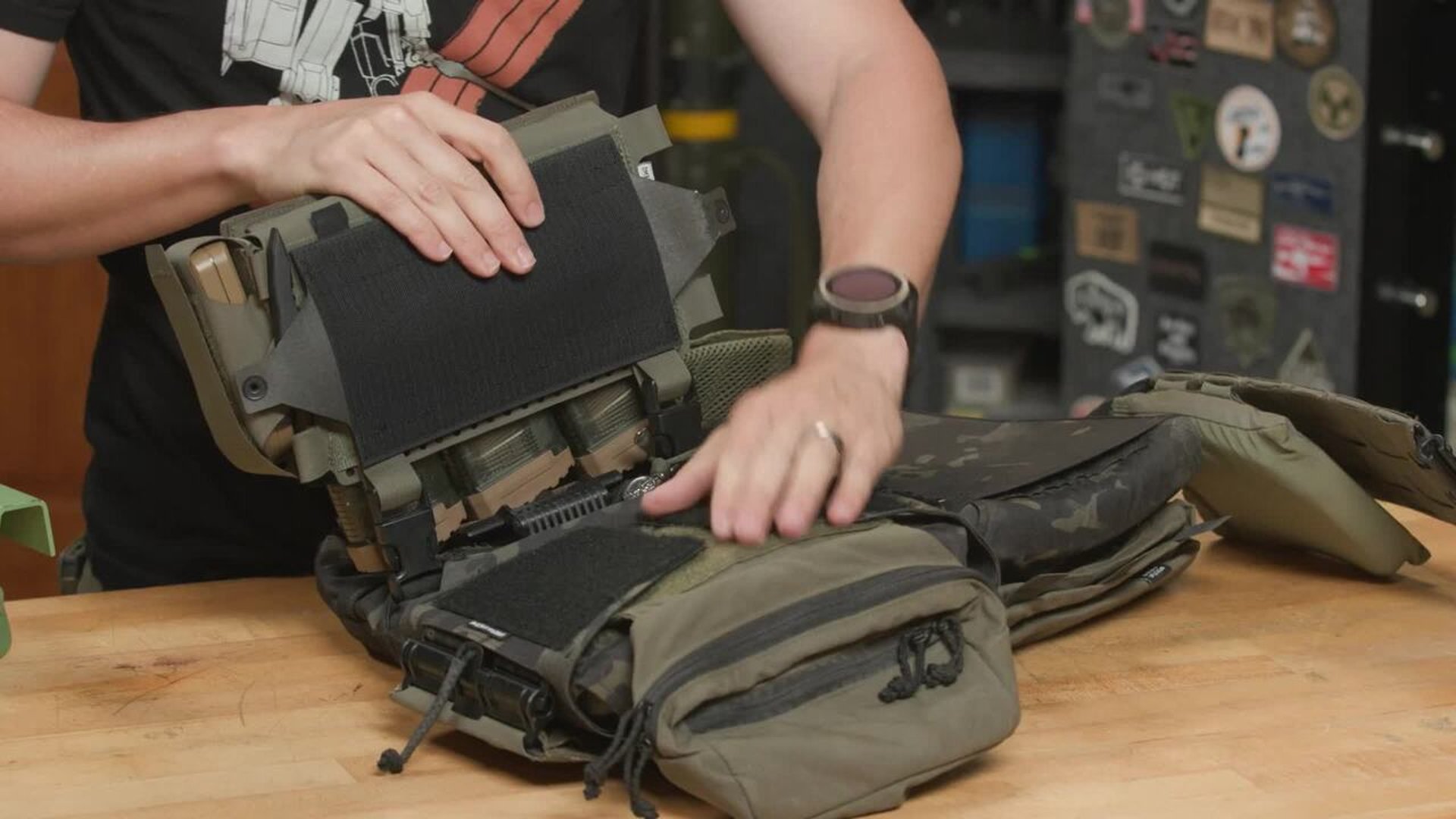
Caleb's Plate Carrier Setup
Inside Caleb's Plate Carrier Setup
One of the most common questions viewers ask whenever armor appears in a Brownells video is simple: What plate carrier are you running?
Rather than answering that question individually every time, this walkthrough covers the entire setup, including the gear choices, configuration philosophy, and practical reasons behind each component. While every shooter's needs will be different, understanding why equipment is selected can help guide your own setup decisions.
Why Run a Plate Carrier at All?
For many shooters, armor serves multiple purposes. Some use it for preparedness, while others use it for competition and training events that include armored divisions.
Regardless of the application, one principle remains consistent: equipment should be trained with, not simply stored away. Becoming familiar with armor, magazine placement, weight distribution, and movement while wearing gear takes time and repetition. The more time spent training in a properly configured setup, the more comfortable and efficient the user becomes.
The Foundation: Spiritus Systems LV119
The entire setup is built around a Spiritus Systems LV119 plate carrier in Multicam Black. The system consists of the front plate bag, rear plate bag, and Spiritus Systems cummerbund configuration.
One of the primary reasons for selecting this platform is modularity. The LV119 allows users to tailor the carrier to specific needs while maintaining a streamlined profile and excellent comfort.
Rear Bag and Back Panel Configuration
The rear plate bag is intentionally kept simple.
A Spiritus Systems back panel is installed, but the upper section remains empty. The lower utility pocket is primarily reserved for lightweight items such as a wet-weather layer when needed. Most of the time, the rear panel remains uncluttered to keep weight and bulk to a minimum.
Armor Configuration
This setup utilizes front, rear, and side armor plates.
The philosophy behind side armor is straightforward. If a situation justifies wearing front and rear ballistic protection, adding side protection makes sense when the capability exists. While everyone would prefer to remain oriented toward potential threats, real-world situations rarely unfold perfectly.
The armor itself consists of Hesco Level IV plates installed in the front, rear, and side plate bags.
Quick-Release and Fitment Features
To simplify donning and doffing, the setup uses a Tubes quick-release attachment system.
Expander wings are incorporated to provide additional adjustability without requiring major modifications to the carrier. This becomes especially useful when seasonal clothing changes require minor adjustments for heavy jackets or cold-weather layers.
The combination allows quick fitment changes while preserving the convenience of the Tubes system.
Dangler and Utility Storage
A small dangler pouch is mounted beneath the front plate bag.
Unlike dedicated medical or mission-specific pouches, this pouch is intentionally left mostly empty. It serves as a utility compartment for temporary storage during classes, training sessions, and range work.
Maintaining at least one flexible storage area provides room for items that may not have a permanent place elsewhere on the carrier.
Magazine Placard Setup
The front placard is a Spiritus Systems Mk5 setup configured with three rifle magazines.
An elastic front pouch has been added to increase carrying capacity when additional magazines are needed. When unused, the elastic insert collapses flat against the placard, adding minimal bulk while remaining available when extra storage is required.
Breaching and Rescue Tool Integration
Mounted between the front plate bag and placard is a breaching and rescue bar.
This setup allows the tool to remain secure, protected, and out of the way until needed. The mounting solution sandwiches the tool carrier between the placard and plate bag, minimizing snag hazards while preserving accessibility.
The breaching tool itself comes from Good Dude Concepts, while the retention system is provided by Blue Alpha.
Kestrel Storage and Support Equipment
Attached to the side of the placard is a Spiritus Systems TKO pouch.
Rather than storing a tourniquet, this pouch houses a Kestrel 5700 Elite weather meter. The side-mounted location preserves a low-profile front surface while keeping the Kestrel readily accessible during range sessions and ballistic calculations.
Why Medical Gear Stays on the Belt
One notable aspect of the setup is the absence of medical equipment on the plate carrier itself.
The reasoning is simple: a gun belt is worn far more frequently than the plate carrier. By keeping medical gear on the belt, first-aid supplies remain available regardless of whether armor is being worn.
Because the cummerbund remains largely uncluttered, adding medical equipment later would be easy if mission requirements changed.
Additional Equipment
The carrier also includes a Juggernaut phone mounting system, although it is not used regularly. The mount remains available for applications that benefit from phone integration, navigation, or digital tools during training.
Final Thoughts
A good plate carrier setup is never about copying someone else's gear exactly. The strength of modern armor systems comes from their modularity and adaptability. Every pouch, tool, and accessory should support a specific purpose and work within the user's overall mission.
This LV119 configuration focuses on simplicity, versatility, and practical usability while maintaining room for future adjustments as needs evolve. Whether the goal is competition, training, preparedness, or professional use, the most important factor is building a setup that works for you and then spending time training with it.
