




The Top 3 Ways To Clean A Suppressor
Three Effective Ways to Clean a Suppressor
Suppressors collect a tremendous amount of carbon, fouling, and debris over time. Proper maintenance helps preserve performance, extend service life, and prevent excessive buildup from becoming difficult to remove later.
In this Brownells Tech Tip, we look at the three most common suppressor cleaning methods and discuss when each one makes the most sense.
Method 1: Traditional Solvent and Brush Cleaning
The oldest suppressor cleaning method is also the simplest. Apply a quality firearm solvent, allow it to soak, and use brushes, picks, and other tools to remove carbon deposits and fouling.
Many shooters also use foaming bore cleaners and suppressor cleaning foams that expand inside the suppressor body to help break down stubborn carbon buildup.
This method works especially well for user-serviceable suppressors that can be disassembled. Once the baffles are removed, each component can be individually cleaned and inspected.
The downside is that manual cleaning requires more time and effort, particularly with sealed suppressors where internal components cannot be accessed directly.
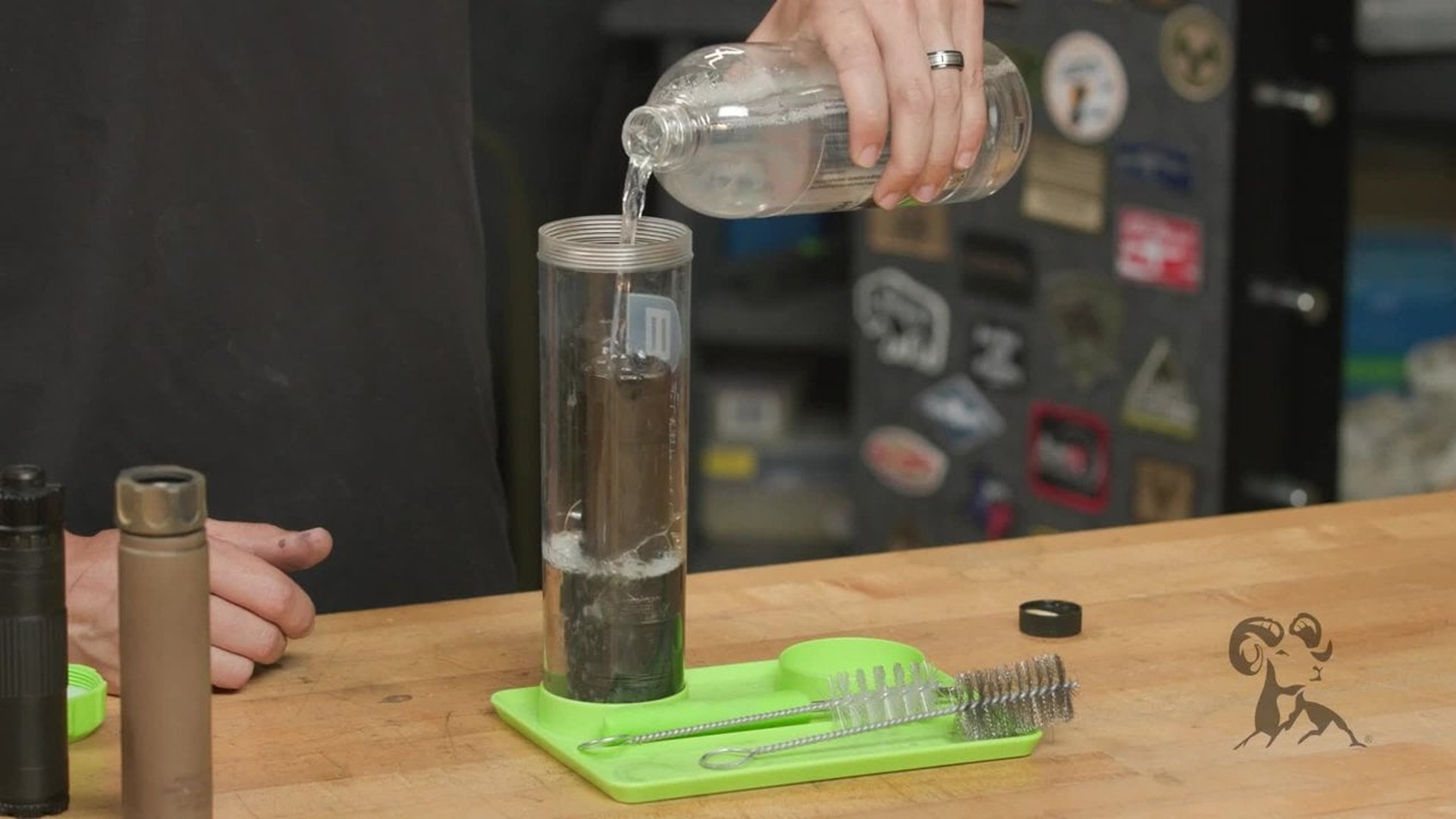
Method 2: Suppressor Soak Systems
Suppressor soak systems have become increasingly popular because they require very little effort from the user. The process is simple:
• Disassemble the suppressor as much as possible
• Place the components into the soak tube
• Fill the tube with cleaning solution
• Allow the suppressor to soak
• Rinse and dry the suppressor
Many shooters follow up by blowing compressed air through the suppressor to remove loosened carbon and cleaning solution from hard-to-reach areas.
One advantage of soak systems is that the cleaning solution can often be reused multiple times before replacement becomes necessary. This makes them economical for shooters who regularly clean suppressors, bolt carrier groups, and other firearm components.
Special Considerations for Coated Suppressors
Many suppressor cleaning solutions are aggressive enough to affect aftermarket finishes such as Cerakote, Gun-Kote, spray paint finishes, and similar coatings.
Before using any chemical cleaning product, consult both the suppressor manufacturer and the cleaning solution manufacturer. While some shooters report good results with coated suppressors, finish durability can vary significantly depending on the coating and cleaning product used.
Cleaning Flow-Through Suppressors
Flow-through suppressors present unique cleaning challenges because they cannot always be sealed and filled internally like traditional suppressor designs.
In these cases, many shooters simply immerse the entire suppressor in the cleaning solution and allow the soak process to work throughout the internal passages. Proper orientation during soaking can also help loosen debris and allow contaminants to drain more effectively.
Method 3: Ultrasonic Cleaning
For many firearm owners, ultrasonic cleaning has become the preferred suppressor maintenance method.
Ultrasonic cleaners use high-frequency vibrations combined with a cleaning solution to break down carbon and fouling. Heated ultrasonic cleaners can improve cleaning performance even further by accelerating the breakdown process.
The cleaning procedure is straightforward:
• Disassemble the suppressor when possible
• Place components into the ultrasonic tank
• Fill the tank with an approved firearm cleaning solution
• Run the cleaning cycle
• Rinse components
• Dry thoroughly using compressed air
For sealed suppressors, rotating the suppressor during the cleaning process can help ensure all internal areas receive adequate exposure to the cleaning action.
Avoid Harsh Cleaning Chemicals
One of the most important lessons when using an ultrasonic cleaner is selecting the correct cleaning solution.
Certain industrial cleaners contain chemicals that can damage aluminum, anodized surfaces, and other firearm finishes. Some solutions can strip anodizing surprisingly quickly when combined with heat and ultrasonic action.
Using cleaning products specifically designed for firearms is generally the safest approach for preserving finishes and preventing corrosion-related issues.
Which Suppressor Cleaning Method Is Best?
Each method has its place.
Manual cleaning is affordable and effective, especially for user-serviceable suppressors.
Suppressor soak systems offer a simple, low-effort approach that works well for many sealed suppressors.
Ultrasonic cleaning provides some of the fastest and most thorough results, particularly for shooters who regularly clean multiple firearms and suppressors.
The best choice depends on your suppressor design, maintenance schedule, and personal preference. Regardless of the method you choose, regular cleaning will help keep your suppressor performing at its best and make future maintenance significantly easier.