


Should You Suppressor Optimize Your AR15?
AR-15 Suppressor Setup: What Matters?
Caleb from Brownells discusses how adding a suppressor can change an AR-15’s operating characteristics. His main point is that the suppressor itself influences how much adjustment a particular rifle may need.
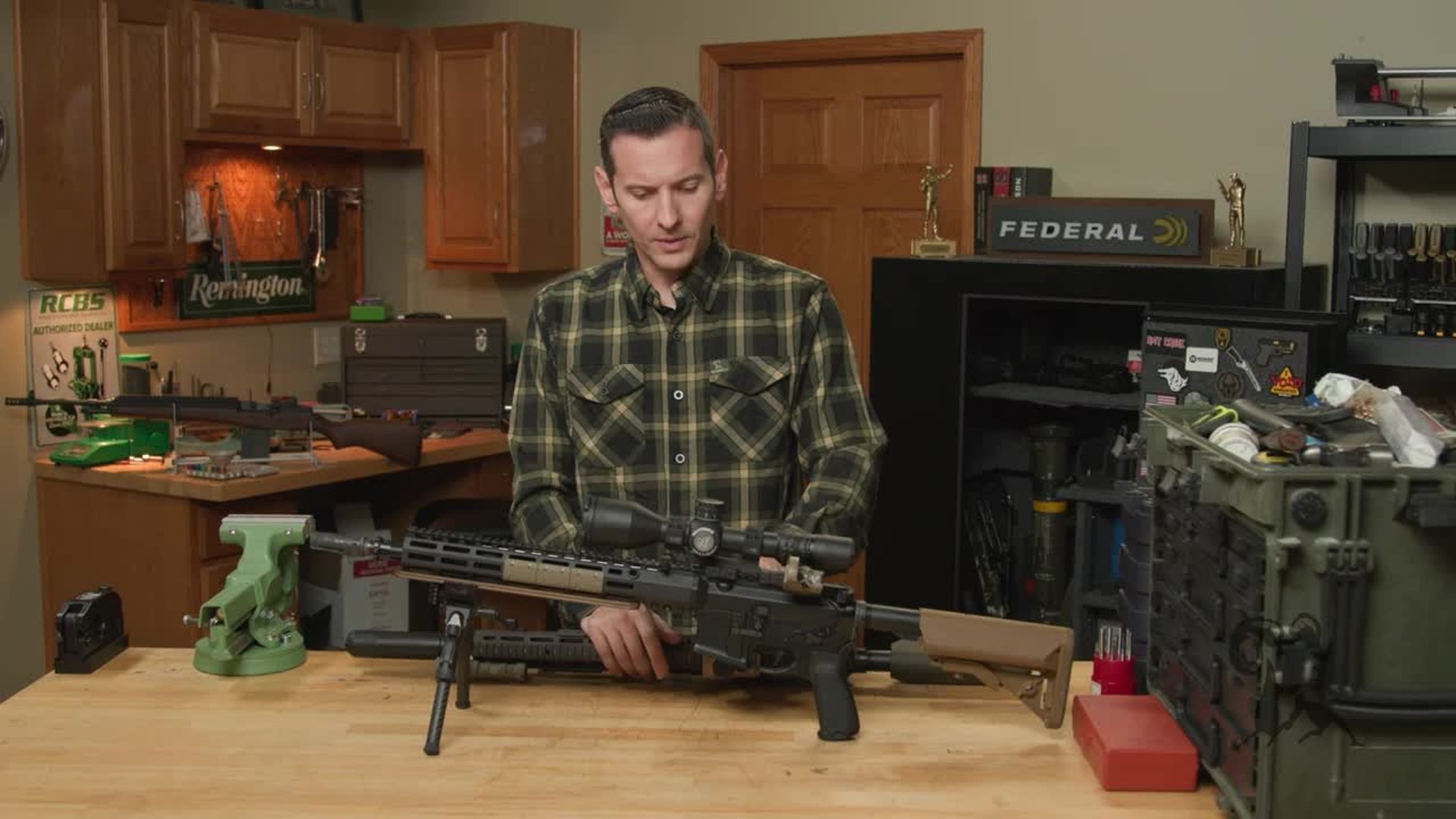
He uses two personal builds to illustrate his choices: a 6mm ARC originally configured around a traditional suppressor and a carbine paired with a low back pressure suppressor.
Traditional vs. Low Back Pressure Suppressors
Caleb describes differences in cycling and gas at the shooter’s face when switching between suppressed and unsuppressed operation.
In his experience, low back pressure designs can reduce those changes and simplify setup. He emphasizes that the firearm, cartridge, and suppressor combination all influence the result.
Recoil Systems and Component Wear
Caleb discusses the relationship between increased operating speed and maintenance demands. He identifies recoil springs, extractors, and ejectors as components worth monitoring.
He also shares his preference for the BCM MK2 Recoil Mitigation System, which he uses across his AR-15s. This is his preferred approach rather than a universal requirement for suppressed operation.
Adjustable Gas Blocks
An adjustable gas block regulates gas traveling through the firearm’s gas system. Caleb distinguishes that flow from residual gas entering through the chamber as the action opens.
His 6mm ARC uses a Riflespeed adjustable gas system. He values its accessible controls, numbered positions, and serviceability when moving between configurations.
Gas-Mitigating Charging Handles
Caleb discusses charging handle designs intended to redirect or disperse gas near the rear of the receiver.
He notes that his 6mm ARC did not require a specialized vented charging handle for his needs. His example reinforces the value of evaluating the actual setup before choosing additional components.
Alternative Bolt Carrier Designs
The video also mentions the KAK K-SPEC down-venting bolt carrier. Caleb shares a favorable impression from his own shooting experience.
He presents it as another available design approach within the broader discussion of suppressed AR-15 operation.
Dedicated Suppressor Configurations
Caleb distinguishes a rifle that regularly changes between suppressed and unsuppressed use from one that keeps a dedicated suppressor.
Those different uses influence how much adjustability he wants. The appropriate configuration depends on the complete system and its intended role.
The Low Back Pressure Carbine Example
Caleb’s second example uses a SureFire RC4, a fixed gas block, a BCM recoil system, and a Geissele charging handle.
He reports little noticeable change when attaching that suppressor to this particular rifle. This illustrates his preference for low back pressure designs on semi-auto firearms.
Durability and Muzzle Flash
Sound reduction is one consideration alongside durability, weight, and flash performance. Caleb discusses how those priorities shape his suppressor choices.
He also addresses differences between low back pressure designs, emphasizing that they do not all share identical characteristics.
Matching the Setup to the Application
Caleb’s approach begins with the suppressor and intended use, then considers the recoil system, gas system, and whether additional gas-mitigation features offer a practical benefit.
The two rifles demonstrate different solutions based on his experience with each configuration.