



Inheriting an Old Gun - Remington 870 Wingmaster
How to Clean and Preserve an Inherited Remington 870 Without Losing Its Character
When you inherit a firearm, you're preserving more than a tool. You're preserving memories. Every worn edge, scratch, and spot of honest wear tells part of that firearm's story. While it may be tempting to completely refinish an older shotgun, many heirloom firearms are better served by careful cleaning and preservation rather than restoration.
In this Brownells Tech Tip, Caleb demonstrates how to deep clean a Remington 870 Wingmaster that belonged to his father, showing how to stop corrosion, inspect critical components, and return the shotgun to reliable service while preserving its original appearance.
Preserve the History, Don't Erase It
The objective isn't to make the shotgun look new.
Instead, the goal is to remove dirt, hardened grease, and active rust while leaving decades of honest wear intact. Surface rust can be neutralized before it spreads further, and old finishes can be protected without sanding, polishing, or rebluing the firearm.
For family heirlooms, this approach preserves both function and sentimental value.
Tools and Cleaning Supplies
Most of the work can be completed with common firearm cleaning supplies, including a quality bore solvent, light gun oil, heavier lubricant for moving parts, nylon brushes, pipe cleaners, cleaning rods, and 0000 steel wool for treating light surface rust.
Several Remington 870-specific tools make disassembly easier, including a forend wrench and magazine spring retainer tool, but the overall cleaning process applies to many pump-action shotguns.
Complete Disassembly for a Thorough Inspection
The shotgun is field stripped before moving into a complete teardown.
The barrel, trigger group, bolt assembly, action bars, magazine tube components, forend, and buttstock are removed so every internal surface can be inspected and cleaned. During disassembly, Caleb points out common trouble spots, including hidden rust beneath the forend, loose stock bolts that can lead to cracked stocks, and heavily fouled trigger groups.
Rather than rushing through the process, each component is inspected for excessive wear, broken springs, damaged pins, or chipped parts before reassembly.
Cleaning Without Damaging the Finish
Most internal components require nothing more than solvent, nylon brushes, and careful wiping.
Surface rust is treated using light oil and 0000 steel wool. The goal is to remove loose oxidation while preserving as much of the original bluing as possible. Deep pitting remains part of the firearm's history, but active corrosion is stopped before it progresses.
The receiver, magazine tube, barrel, and bolt are cleaned individually, with special attention paid to neglected areas such as the magazine tube interior and beneath the ventilated rib.
Trigger Group Service
The Remington 870 trigger group receives the most detailed attention during the project.
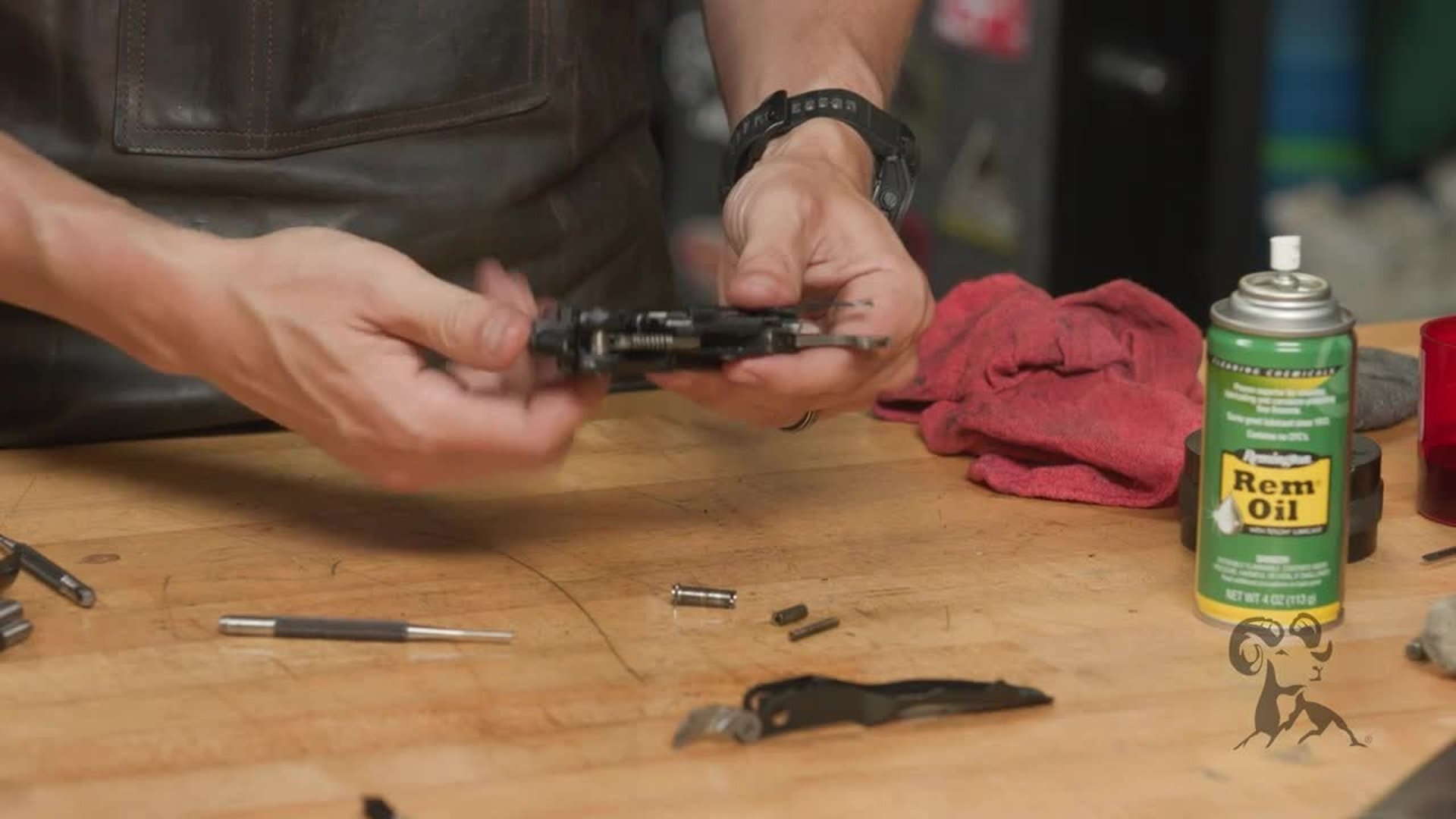
Caleb completely disassembles the assembly, explains the function of each component, identifies the trigger and shell lifter retainers, and highlights small springs and detents that are easily lost during maintenance. He also explains how the action release interfaces with the trigger mechanism, making this portion especially valuable for anyone learning how the 870 operates.
Inspect Before You Lubricate
Cleaning provides an opportunity to inspect every major component.
The firing pin, extractor, magazine spring, follower, stock hardware, and bolt assembly are all examined before fresh lubricant is applied. Light oil protects metal surfaces from future corrosion, while heavier grease is reserved for high-friction contact points during final assembly.
This approach keeps the shotgun protected without attracting excessive dirt or debris.
Keep an Heirloom Ready for the Next Generation
An inherited firearm doesn't need to be perfect to be valuable.
With careful maintenance, proper lubrication, and routine inspections, an older Remington 870 can remain both a functional hunting shotgun and a family keepsake for decades to come. Preserving its history while preventing further deterioration ensures it can be enjoyed today and eventually passed on to the next generation.
For many owners, that's far more rewarding than making an old shotgun look brand new.