




How to boresight a rifle on the range, with no tools
How to Bore Sight a Rifle Without Special Tools
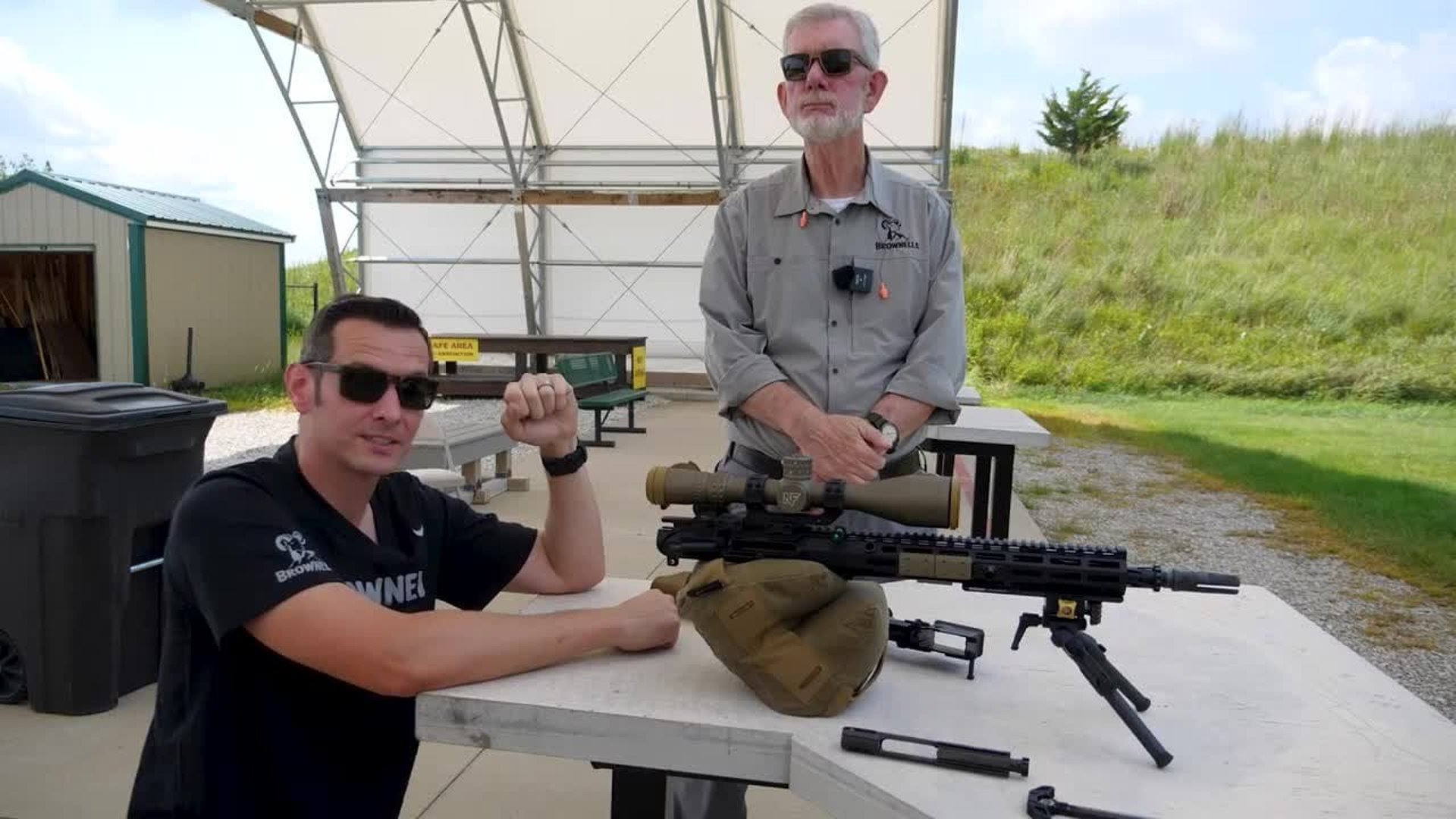
Steve and Caleb are at the Brownells range with a quick tip for getting a rifle on paper when you don't have a dedicated bore sighting tool.
The technique is about as straightforward as the name suggests. If you can get a clear view through the bore, you can visually align the bore with a target and then adjust the optic toward the same point.
This isn't intended to replace actually zeroing the rifle. The goal is simply to get close enough that your first shots land on paper, saving ammunition and time during the final sight-in process.
Start With an Unloaded Rifle
Before doing anything else, Steve and Caleb verify that the firearm is unloaded.
That's particularly important because this method requires access through the action so the shooter can look directly through the bore.
Keep ammunition away from the work area and verify the firearm is clear before proceeding.
Preparing an AR for Bore Sighting
An AR-style rifle makes visual bore sighting relatively straightforward because the upper and lower receivers can be separated.
With the firearm verified unloaded, Caleb separates the upper and removes the bolt carrier group and charging handle so he has an unobstructed view through the barrel.
Other firearm designs require different approaches, but the basic concept remains the same: you need to be able to see through the bore toward the target.
Support the Rifle
The rifle needs to remain as stationary as possible.
Caleb uses a bipod and shooting bag to support the upper. If you don't have a bipod, additional bags or another stable support can be used.
The specific support isn't particularly important. What matters is keeping the firearm stable while alternating between looking through the bore and looking through the optic.
Any movement means you'll need to realign the bore before continuing.
Choose an Easy-to-Identify Target
Caleb has a target positioned downrange.
Steve points out that if you're at a range with several targets, using one with a distinctive color or appearance can make the process easier.
When looking through a small-caliber bore, your field of view is limited. A target that's easy to identify helps ensure you're aligning the rifle with the correct aiming point.
Looking Through the Bore
Caleb looks through the barrel from the chamber end toward the muzzle.
With a small bore such as .22 caliber, this can take some patience.
The first objective is to establish a centered view through the barrel. Caleb describes seeing the chamber side as a larger circle and the muzzle opening as a smaller circle inside it.
Checking Concentricity
The key is concentricity.
Caleb positions his eye so the smaller circle formed by the muzzle appears centered inside the larger circle visible from the chamber end.
There should be approximately equal space around the smaller circle.
This helps ensure that you're actually looking straight through the bore instead of viewing it from an angle.
Centering the Bore on the Target
Once Caleb has a concentric view through the barrel, he moves the supported rifle until the center of the bore is aligned with the center of the target.
The rifle then needs to remain in that position.
From this point forward, Caleb repeatedly moves between the bore and the optic, checking the bore alignment each time to make sure the firearm hasn't shifted.
Adjusting the Scope
With the bore centered on the target, Caleb looks through the scope and adjusts the optic toward that same point.
He starts with elevation and then checks the bore again.
This back-and-forth process is important. Even a small amount of movement while adjusting the scope can change where the bore is pointing.
Caleb makes an adjustment, checks the bore, realigns the rifle if necessary, and then continues with the optic.
He repeats the process for windage until the scope and bore are both approximately aligned with the target.
Bore Sighting Is Not Zeroing
Visual bore sighting doesn't mean the rifle is zeroed.
The bore axis and line of sight through the optic are simply being visually aligned at a particular distance. That doesn't account for the actual trajectory of the bullet.
The purpose is to get close.
Caleb has used this method before and found himself only a few inches from his desired point of impact, but results can vary.
Once the rifle is bore sighted, the actual zero still needs to be confirmed and adjusted by firing the appropriate ammunition at the range.
Bore Sighting a Bolt-Action Rifle
The same concept works particularly well with many bolt-action rifles.
Remove the bolt from an unloaded rifle, establish a stable shooting position, and look through the bore from the chamber end.
Align the bore with the target, then adjust the optic toward the same point while keeping the rifle stationary.
In some ways, a conventional bolt-action can be even simpler to visually bore sight than an AR.
Other Firearms You Can Bore Sight
Steve and Caleb point out that the technique isn't limited to ARs and bolt-action rifles.
The basic method can work with many firearms where you can obtain an unobstructed view through the bore. Single-shot and break-action designs can be particularly straightforward.
The exact disassembly procedure depends on the firearm, so follow the manufacturer's instructions and don't disassemble anything you're unfamiliar with simply to bore sight it.
Getting Your Rifle on Paper
Visual bore sighting is simple, requires very little equipment, and can save ammunition when setting up a new optic or returning a scope to zero.
Support the unloaded rifle securely, establish a centered view through the bore, align it with an identifiable target, and then adjust the optic toward the same point while making sure the rifle doesn't move.
After that, head to the firing line and complete the actual zero with live ammunition.
If you have your own bore sighting tips, leave them in the comments. As always, if you need help with your rifle or optic setup, give the Brownells Tech Line a call. We'll be happy to help.
