




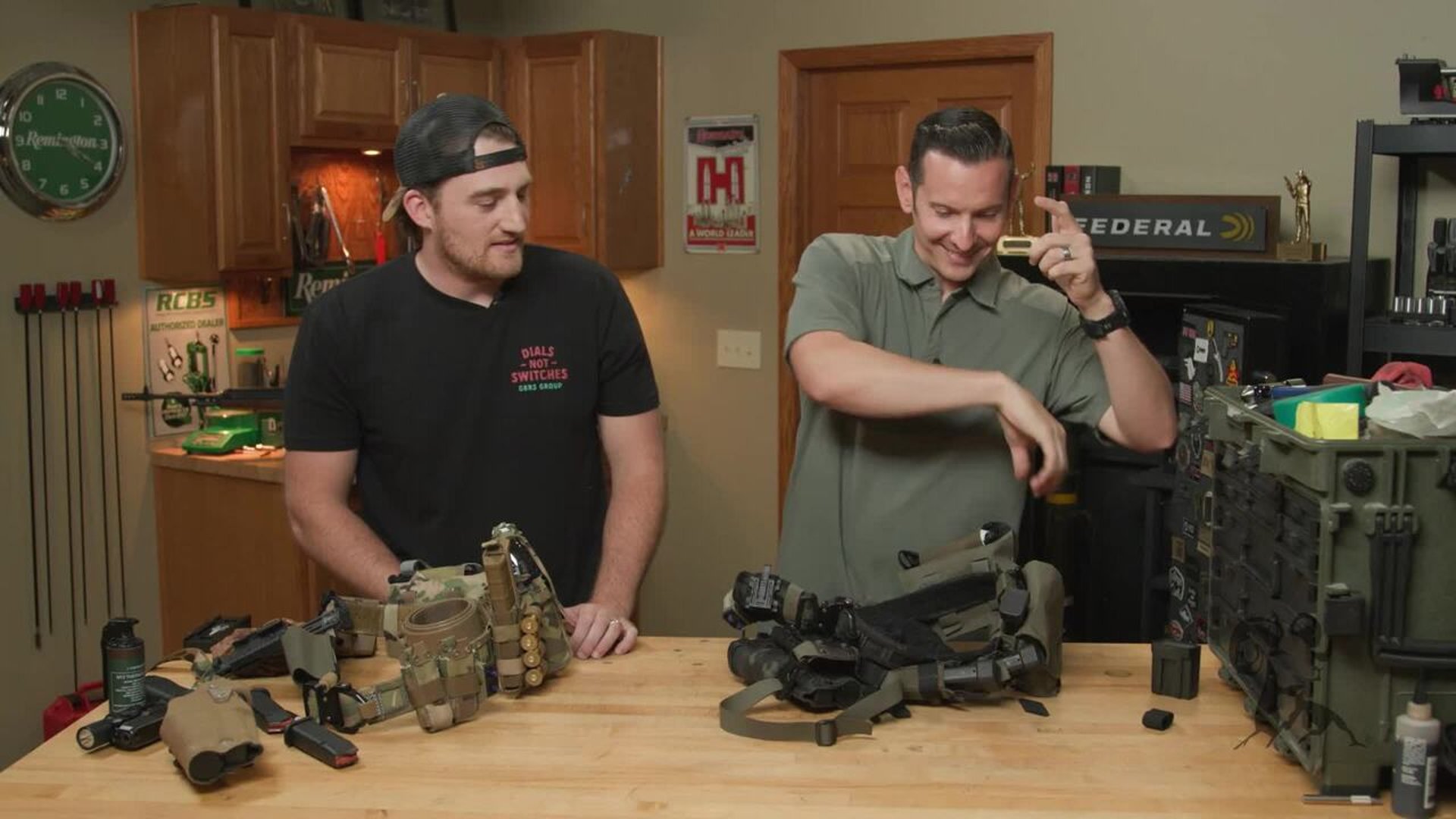
Gun Belt Setup With Caleb and Jude
Building a Practical Gun Belt Setup
A well-designed gun belt should support your shooting style, training goals, and equipment needs without adding unnecessary bulk. In this Brownells Tech Tip, Caleb and Jude compare their personal belt setups, highlighting the similarities, differences, and reasoning behind each configuration.
Although their loadouts are nearly identical, subtle differences reflect individual preferences, shooting techniques, and intended use.
Starting with the Belt
Both setups are built around the GBRS Group Assaulter Belt, a lightweight, rigid platform designed to support holsters, magazine pouches, medical gear, and other accessories while maintaining stability during movement.
Its stiffness helps distribute weight evenly while providing a solid foundation for modular equipment.
Magazine Placement Matters
Magazine placement is one of the biggest differences between the two setups.
Jude runs a traditional right-handed configuration with pistol magazines positioned forward for efficient support-hand reloads. Caleb's arrangement differs because he shoots rifles left-handed while shooting handguns right-handed. That crossover requires relocating rifle magazines to accommodate his shooting style while still maintaining an efficient draw stroke.
The takeaway is simple: build your belt around how you actually shoot rather than copying someone else's layout exactly.
Spiritus Systems Magazine Pouches
Both shooters rely on Spiritus Systems magazine pouches.
The pouches feature a rigid internal structure that keeps the opening flared, making one-handed magazine reinsertion significantly easier than many soft nylon pouches. Optional elastic retention bands can also be added for additional security during movement, obstacle courses, or competition stages.
The modular attachment system allows users to mount the pouches vertically or adapt them for angled configurations depending on personal preference.
45-Degree Magazine Mounts
Caleb mounts his magazine pouches at approximately a 45-degree angle using Blue Alpha adapters.
This configuration lowers the magazines, improves clearance when wearing a plate carrier, and increases torso mobility. The tradeoff is that angled pouches consume more belt space, but the improved ergonomics can make the compromise worthwhile for many shooters.
Utility Pouches for Everyday Range Use
Both setups include utility pouches that provide flexible storage.
Rather than filling every compartment permanently, these pouches are intentionally kept mostly empty. That allows them to carry spare magazines, tools, water bottles, electronics, or other equipment as needed during a training session or competition.
Caleb also keeps a multitool, lens cleaning supplies, and a waterproof storage pouch inside his utility pouch for unexpected weather or equipment maintenance.
Medical Gear Placement
Each belt includes an individual first aid kit mounted at the center rear of the belt.
This location keeps medical equipment accessible while freeing valuable space elsewhere on the belt. Caleb notes that moving his medical kit to this dedicated location also freed additional room inside his utility pouch for other equipment.
Additional Rifle Magazine Storage
Both shooters use a SPUD pouch for rifle magazines or general-purpose storage.
Depending on the day's training, the pouch may carry one or two rifle magazines, a water bottle, or remain empty. The flexible design allows it to adapt easily to different courses of fire without permanently increasing the belt's profile.
Holsters and Support Equipment
Both setups utilize the Safariland QLS system paired with a True North Concepts Modular Holster Adapter.
The quick-detach system allows holsters to be swapped between different firearms while maintaining a consistent draw position. Leg straps help stabilize the holster during movement, and both shooters praise the durability of the QLS system after extensive use.
Additional accessories include hearing protection holders, shot timer mounts, gloves, and compact optic adjustment tools, all selected to solve common problems encountered during training and competition.
Choosing the Right Belt Setup
One consistent theme throughout the discussion is that there is no universal "perfect" gun belt.
The best configuration depends on your shooting style, the equipment you carry, and the type of training or competition you participate in. Modular components allow shooters to adjust magazine placement, pouch locations, and accessory choices as their needs evolve.
The goal isn't to copy someone else's setup exactly. It's to understand why each piece of gear is there and build a belt that supports your own workflow while staying comfortable, efficient, and reliable on the range.
