




Top AR Accuracy Upgrades
How to Make Your AR-15 More Accurate
When shooters start looking for ways to improve AR-15 accuracy, it is easy to get distracted by accessories that do little to improve actual performance. In this Brownells Tech Tip, Caleb and Steve focus on the upgrades and setup choices that genuinely tighten groups and improve consistency on target.
The biggest takeaway is simple: accuracy starts with quality core components and proper setup.
Start with the Barrel
If you want to improve the accuracy of an AR-15, the barrel is the first place to look. A quality barrel has more impact on mechanical precision than almost any other single component.
For shooters building a rifle from scratch, choosing the right barrel early is the most cost-effective path. Replacing the barrel on an off-the-shelf rifle works too, but building around a precision-focused barrel avoids paying for factory parts you may eventually discard.
The video also highlights the importance of matching barrel twist rate to ammunition choice. Heavier bullets like 77 grain loads typically require faster twist rates for best stability and accuracy.
Why Free Float Handguards Matter
A free float handguard is one of the most important upgrades for a precision AR-15. Standard handguards can transfer pressure directly into the barrel, especially when using a bipod or resting the rifle on a barricade or bench.
That pressure changes point of impact and increases group size.
A properly installed free float system isolates the barrel from outside forces, helping maintain consistent harmonics and better repeatability shot to shot.
The discussion also warns against low-quality handguards with poorly machined barrel nuts. Cheap components can introduce alignment issues that negatively affect accuracy.
Buy Quality Components
One recurring theme throughout the video is avoiding bargain-bin parts.
Cheap handguards, optics, and scope rings may save money initially, but they often introduce inconsistency and reliability problems. Precision rifles benefit from quality machining, repeatable tolerances, and solid mounting systems.
Well-made handguards from reputable manufacturers help ensure proper barrel alignment and secure mounting surfaces.
Upper and Lower Receiver Fit
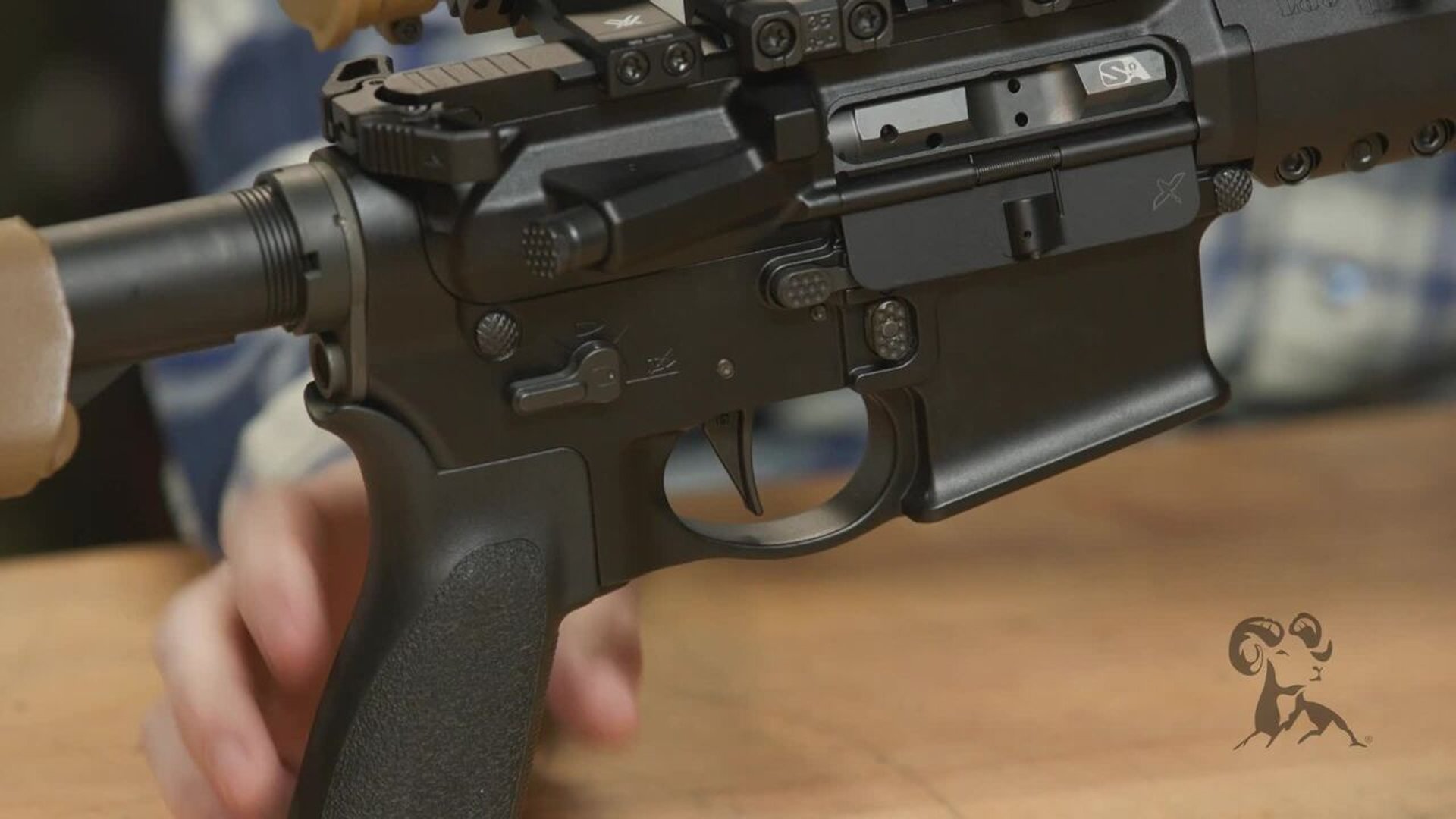
Many shooters assume a loose fit between the upper and lower receiver directly hurts accuracy. Caleb and Steve explain that receiver slop usually affects shooter input more than true mechanical precision.
Movement between receivers can make the rifle feel inconsistent during trigger press and recoil management. Some lowers include tension screws to reduce this movement, while products like Accu-Wedges can help tighten fitment.
Still, the advice remains the same: quality receivers and proper assembly matter most.
Trigger Control and Ergonomics
A quality trigger is one of the best upgrades for practical accuracy. A lighter, cleaner trigger helps reduce shooter-induced movement during the firing process.
Good ergonomics are equally important. Proper stock fit, comfortable cheek weld, and consistent shooting position all contribute to better precision.
The rifle should fit the shooter naturally and allow consistent eye alignment behind the optic.
Bolt Lockup and Headspace
The video also touches on bolt consistency and headspace.
Proper headspace helps ensure consistent ignition and repeatable bolt lockup. Just because a rifle functions reliably does not always mean headspace is optimized for best precision.
Consistency is critical. The more repeatable the bolt lockup and cycling process, the more consistent the rifle performs.
Gas Tuning and Recoil Management
An adjustable gas block allows shooters to tune recoil impulse for smoother operation. This becomes especially useful when switching between suppressed and unsuppressed shooting.
Muzzle brakes and suppressors also improve shooter comfort and control by reducing recoil and muzzle movement. While these upgrades may not directly improve mechanical accuracy, they help shooters maintain better consistency behind the rifle.
Proper Optic Mounting
Even the best scope cannot perform well if mounted incorrectly.
Quality scope rings and mounts are critical for maintaining zero and preventing movement under recoil. The hosts stress the importance of mounting optics entirely on the upper receiver rather than bridging the gap between the receiver and handguard.
If the handguard flexes or shifts, the optic can lose zero.
Proper optic height and positioning also improve shooter comfort and consistency.
Controls and Long Range Shooting
Good controls help shooters stay mounted on the rifle during operation. Ambidextrous safeties, magazine releases, and bolt controls improve efficiency and reduce unnecessary movement.
The video also discusses the importance of rifle leveling for longer-range shooting. Canting the rifle becomes increasingly noticeable beyond 300 yards, making a visible scope level a valuable addition for precision setups.
Ammunition Selection Matters
Even identical rifles may prefer different ammunition loads.
Testing multiple brands and bullet weights is one of the best ways to discover what your barrel shoots most accurately. Once you find a load your rifle prefers, consistency becomes much easier to maintain.
Good magazines, reliable feeding, and quality ammunition all contribute to dependable precision performance.
For shooters looking to build a more accurate AR-15, the formula is straightforward: quality barrel, free float handguard, solid optic mounting, good trigger, proper setup, and consistent ammunition.