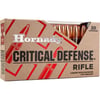




Hornady Critical Defense .223 Rem
HORNADY CRITICAL DEFENSE .223 VS FMJ AND BTHP IN BALLISTIC GEL
In this video, Caleb compares three common .223 loads to evaluate how they perform in ballistic gel. The focus is on understanding the real differences between defensive ammunition, standard full metal jacket rounds, and match style bullets.
TEST SETUP AND AMMO SELECTION
The test includes three types of ammunition: Hornady Critical Defense .223, standard 55 grain full metal jacket, and a 75 grain boat tail hollow point. All rounds are fired from a 13.7 inch AR-15, representing a practical rifle configuration for defensive use.
Velocity between the Critical Defense and 55 grain FMJ is very similar, which means shooters can expect a nearly identical zero between the two.
WHY DEFENSIVE AMMO MATTERS
A common argument is that any .223 round is effective because it creates a hole in the target. While that is true, this test highlights the importance of how quickly and efficiently a round transfers energy.
A defensive round that stops a threat faster reduces the amount of time that threat has to respond. That difference, even if measured in fractions of a second, can be critical in a real-world scenario.
CRITICAL DEFENSE PERFORMANCE IN GEL
The Hornady Critical Defense round delivers rapid expansion almost immediately upon entering the gel. The projectile opens aggressively and transfers energy quickly, creating a large and consistent wound channel.
Penetration is controlled, with the bullet stopping within the gel block rather than exiting. This indicates efficient energy dump and effective terminal behavior for close-range defensive use.
55 GRAIN FMJ RESULTS
The standard 55 grain FMJ behaves very differently. It penetrates deeper before beginning to yaw or disrupt, resulting in a narrower wound channel for most of its path.
Although it eventually transfers energy, much of that occurs later in the penetration cycle. In a real-world scenario, this can reduce immediate effectiveness compared to a purpose-built defensive round.
75 GRAIN BTHP PERFORMANCE
The 75 grain BTHP, designed for accuracy rather than terminal performance, shows delayed fragmentation. While it does break apart, the resulting wound channel is smaller and less consistent than the Critical Defense load.
This reinforces the distinction between match ammunition and defensive ammunition. Each is optimized for a different purpose.
COMPARING TERMINAL PERFORMANCE
When comparing all three, the Critical Defense round stands out for its rapid expansion and strong energy transfer. The FMJ penetrates deeply with minimal early disruption, while the BTHP fragments but does not produce the same level of immediate effect.
These differences highlight why ammunition selection should match your intended use.
FINAL THOUGHTS ON .223 DEFENSIVE AMMO
All three rounds are capable of inflicting damage, but their performance varies significantly. For defensive applications, a purpose-built round like Hornady Critical Defense offers clear advantages in energy transfer and wound channel formation.
Understanding these differences allows shooters to make informed decisions and select ammunition that aligns with their specific needs.