




ATN Gen 6 Thermal Optics: Complete Guide to Scopes, Clip-Ons, Binoculars and Monoculars
ATN Gen 6 Thermal Optics: Complete Guide to Scopes, Clip-Ons, Binoculars and Monoculars
Thermal optics have come a long way. Better sensors, improved resolution, longer battery life, and more affordable options have made thermal imaging equipment useful to a much wider range of shooters, hunters, and outdoorsmen.
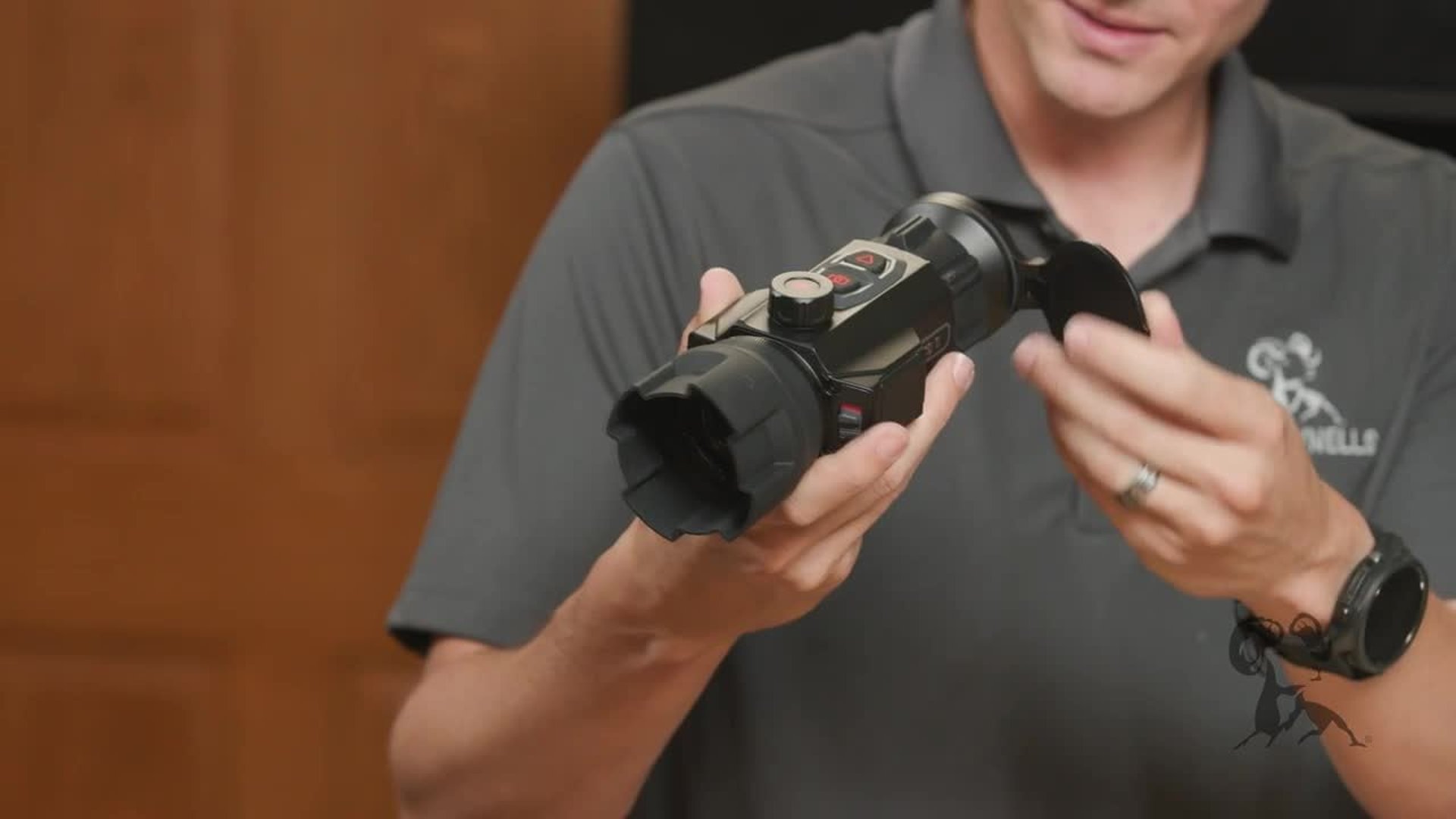
Caleb takes a detailed look at the ATN Gen 6 thermal optics lineup, including weapon-mounted thermal scopes, a clip-on thermal, thermal binoculars, and several handheld thermal monoculars.
Before looking at the individual products, it helps to understand some of the specifications that separate one thermal optic from another.
Understanding NETD and Millikelvin
One of the most important thermal specifications is NETD, or Noise Equivalent Temperature Difference.
NETD is commonly expressed in millikelvin. The important thing to remember is simple: lower is better.
A lower NETD rating means the thermal sensor can distinguish smaller differences in temperature. That can translate into better detail and improved target separation, especially when environmental conditions make thermal contrast more difficult.
Several ATN Gen 6 products covered here fall into roughly the 12 to 20 millikelvin range.
What Does 12 Micron Mean?
Another specification you will frequently encounter when shopping for thermal optics is micron size.
Again, lower numbers are generally desirable. Older thermal units commonly used larger pixel pitches, while the ATN Gen 6 products discussed here use 12-micron sensors.
The combination of a 12-micron sensor and a low NETD rating contributes to the amount of thermal information the optic can provide.
Resolution and Refresh Rate
Resolution works in the opposite direction. Higher resolution generally means more image detail.
ATN offers different resolutions depending on the product and model. That gives buyers the ability to choose between more affordable thermal optics and higher-resolution models.
The Gen 6 products covered here operate at a 50 Hz refresh rate. Refresh rate describes how frequently the displayed image updates. A higher refresh rate produces smoother-looking movement.
For a modern thermal optic, 50 Hz provides a smooth viewing experience.
Common ATN Gen 6 Features
A number of features appear across the ATN Gen 6 lineup.
Hotspot tracking helps identify and follow heat signatures. The optics can also capture pictures and record video, with internal storage available for recorded content.
Weapon-mounted models such as the THOR 6 Mini and THOR 6 Elite offer freeze-frame zeroing. The shooter can freeze the image after firing and move the point of aim to the point of impact.
Multiple firearm profiles also allow one thermal optic to store settings for different rifles.
Another useful improvement is adjustable reticle transparency. Instead of having an opaque digital reticle cover a small target, the transparency can be adjusted so the shooter can see more of the thermal image behind it.
ATN SharpIR
One of the major Gen 6 features Caleb discusses is ATN SharpIR.
SharpIR uses onboard processing to improve the clarity of the thermal image. Rather than simply displaying the raw thermal information, the system processes the image to make the available detail clearer.
That can be particularly useful when trying to identify smaller details within a thermal image.
Improved Thermal Battery Life
Battery technology is another area where modern thermal optics have improved substantially.
Many of the ATN Gen 6 products use rechargeable 18650 batteries. That is especially convenient because the 18650 is already widely used in lights and other shooting-related equipment.
Depending on the model, battery life can extend for several hours, with some of the products covered here reaching eight or nine hours of runtime.
ATN THOR 6 Mini
The THOR 6 Mini is the compact weapon-mounted option in the lineup.
The version Caleb examines has 3.5-28x magnification, a 384x288 thermal resolution, 12-micron sensor, 35mm germanium lens, and NETD rating under 18 millikelvin.
ATN lists a detection range of approximately 2,710 meters for this configuration.
The THOR 6 Mini does not have a dedicated laser rangefinder, but it does include a smart rangefinding system that uses brackets to estimate distance.
At less than 1.2 pounds, the THOR 6 Mini keeps the package relatively compact. A single battery provides approximately 3.5 hours of runtime.
The included QD mounting system allows the optic to be attached directly to a firearm.
ATN THOR 6 Elite
The THOR 6 Elite takes the weapon-mounted concept considerably further.
Unlike the compact THOR 6 Mini, the Elite resembles a traditional riflescope and uses a 30mm tube. That means it can be mounted using conventional 30mm scope rings.
The model shown has 2-6x magnification and a 640x512 thermal resolution. It uses a 12-micron sensor with a NETD rating below 15 millikelvin.
Detection range extends to approximately 3,100 meters.
The Elite also incorporates a laser rangefinder with approximately 1,000 meters of range and a ballistic calculator. Combined with the appropriate settings and application, the system can provide the shooter with ranging and ballistic information through the optic.
THOR 6 Elite Battery System
Battery life is another major advantage of the THOR 6 Elite.
The optic combines a removable 18650 battery with an internal battery. That arrangement allows the removable battery to be swapped while the internal battery keeps the system powered.
With both batteries charged, Caleb notes approximately nine hours of runtime.
For someone spending several hours hunting at night, that significantly reduces the amount of attention required for battery management.
ATN TICO 6 Thermal Clip-On
The TICO 6 takes a different approach.
Instead of replacing the shooter's existing optic, the TICO 6 mounts in front of a conventional riflescope and turns that day optic into a thermal system.
That is particularly attractive for shooters who already have a rifle and optic combination they like and do not want to replace or repeatedly re-zero.
The TICO 6 is designed to work particularly well with conventional optics in roughly the 1-12x magnification range.
The model shown uses a 384x288 thermal resolution, 12-micron sensor, 35mm germanium lens, and NETD rating below 18 millikelvin.
It weighs roughly 1.1 pounds and provides approximately four hours of runtime from one 18650 battery.
Using the TICO 6 as a Thermal Monocular
The TICO 6 can also be converted into a handheld thermal observation device using an optional monocular eyepiece.
That gives the unit additional versatility. It can serve as a thermal clip-on when mounted to the rifle, then be removed and used for observation.
ATN provides a QD mounting system with height adjustment options. An optional scope-mounted adapter is also available for rifles that do not have enough rail space ahead of the day optic.
Mounting the TICO 6
Caleb demonstrates the TICO 6 on an AR-15 equipped with an already-zeroed conventional optic.
The clip-on attaches to the Picatinny rail ahead of the scope. Once the QD tension is properly adjusted and the thermal is focused, the shooter can look through the existing riflescope and see the thermal image.
For hunters who want to keep their preferred daytime optic, that is the main attraction of a clip-on thermal system.
ATN BINOX 6 Thermal Binoculars
The BINOX 6 is one of the most feature-rich observation systems in the lineup.
These binoculars provide more than thermal imaging. They offer day, night, and twilight viewing modes.
The daylight sensor provides a 4K image, while the night mode works with an IR illuminator. The built-in IR illuminator has approximately 400 meters of range.
The thermal system uses a 12-micron sensor with a NETD rating below 15 millikelvin. Magnification ranges from 5.5x up to 44x, and thermal detection range extends beyond 2,700 meters.
BINOX 6 Laser Rangefinder and Dual View
A built-in laser rangefinder provides approximately 1,000 meters of ranging capability.
One of the standout features is dual-view operation. The user can view a conventional daytime image while simultaneously displaying thermal information in a picture-in-picture format.
That gives the observer two different types of visual information without switching devices.
The BINOX 6 also incorporates GPS, a compass, SharpIR, a defog feature, and an IP67 environmental rating.
Two 18650 batteries provide approximately eight hours of runtime.
ATN Blaze Trek and Blaze Seeker
For a more conventional handheld thermal monocular, ATN offers the Blaze Trek and Blaze Seeker.
The two devices look similar externally, but the specifications separate them.
The Blaze Trek has a 384x288 thermal resolution and a NETD rating below 18 millikelvin. The Blaze Seeker uses a 256x192 resolution and a NETD rating below 20 millikelvin.
Both use a 50 Hz refresh rate.
The Blaze Trek provides approximately 1,000 meters of thermal detection range, while the more entry-level Blaze Seeker reaches approximately 350 meters.
Blaze Trek vs. Blaze Seeker
Magnification also differs between the two models.
The Blaze Seeker offers 1.7-13.6x magnification, while the Blaze Trek provides 2.8-22x.
Both include a smart rangefinder rather than a dedicated laser rangefinder. The bracketing system can provide useful range estimates once the user becomes familiar with it.
Both units use internal rechargeable batteries and charge through USB-C.
For someone getting started with thermal observation, the Blaze Seeker provides a more accessible entry point. The Blaze Trek steps up the resolution and detection range for users who need additional capability.
ATN Blaze Hunter 6
The Blaze Hunter 6 is where the handheld lineup takes a major step up.
The model Caleb examines has a 1280x1024 thermal resolution. That is the highest thermal resolution of any unit covered in the video.
It uses a 50mm germanium lens and provides a stated thermal detection range of approximately 3,400 meters.
A built-in laser rangefinder reaches approximately 1,000 meters.
Despite those specifications, the Blaze Hunter 6 weighs roughly 1.1 pounds.
Blaze Hunter 6 Battery Life and Applications
The Blaze Hunter 6 uses an 18650 battery and provides approximately five hours of runtime.
Its high thermal resolution makes it particularly useful when identifying finer details matters. Potential applications discussed include hunting, ranch and property use, search and rescue, law enforcement, observation, camping, exploration, and utility inspection.
For someone looking for a high-resolution handheld thermal rather than a weapon-mounted optic, the Blaze Hunter 6 stands out in the Gen 6 lineup.
Choosing an ATN Gen 6 Thermal Optic
There is no single thermal optic in this lineup that fits every application.
The THOR 6 Mini provides a compact weapon-mounted solution. The THOR 6 Elite adds higher resolution, long detection range, a laser rangefinder, and ballistic features. The TICO 6 lets shooters add thermal capability to an existing day optic.
For observation, the BINOX 6 combines thermal, day, night, ranging, and navigation features in a binocular format. The Blaze Seeker and Blaze Trek provide compact handheld options at different performance levels, while the Blaze Hunter 6 pushes handheld thermal resolution considerably higher.
Understanding specifications such as NETD, micron size, resolution, refresh rate, detection range, and battery life makes choosing between them considerably easier.
If you have questions about thermal optics or need help deciding which setup fits your application, give the Brownells Tech Line a call. We'll be happy to help you out.
