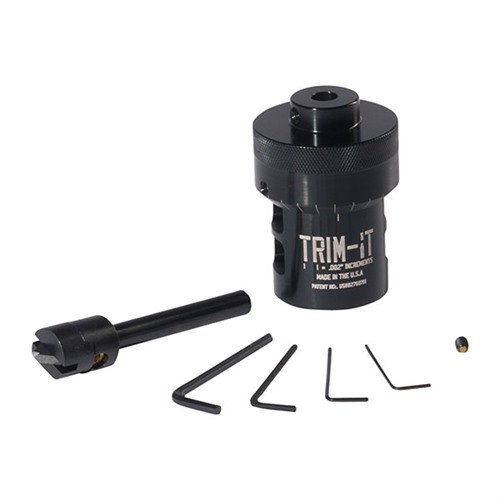
TRIM-IT II CASE TRIMMER Reviews & Ratings
Reviews Summary
The TRIM-IT II CASE TRIMMER receives mixed feedback. While some users appreciate its precision and potential for trimming, many struggle with poor adjustments, troublesome assembly, and a lack of customer support. Issues with quality control, particularly concerning threading and fitting, detract from its usability. Overall, it seems useful but requires significant calibration and patience.
What Reviewers Are Saying
Adjustment Difficulties
70%
Many reviewers express frustration with the adjustment process of the TRIM-IT II, citing sloppy threads and complicated mechanisms that hinder precision. The tool's setup requires multiple hex wrenches, making it cumbersome to achieve accurate settings.
Quality Control Issues
65%
Several reviewers noted inconsistencies in product quality, such as rough internal threading and misalignment of components, leading to less effective trimming. This affects user confidence and overall satisfaction with the product.
Performance and Usability
60%
While some users find success in trimming efficiency with the tool, the majority report poor performance, such as inadequate trimming capabilities and a tendency to wear down quickly, making it a less reliable option.
Customer Service
55%
The lack of responsive customer support is frequently mentioned, with users feeling abandoned when they encounter problems, further compounding frustrations related to product functionality.
Construction Quality
50%
Positive remarks highlight initial perceptions of sturdiness, though many reviewers point out flaws that compromise overall durability. For some, the quality of materials like aluminum raises concerns and impacts long-term usability.
Read the directions well and it works
For the Trimmer that I received in the mail, my only complaint was the highly torqued small allen head screws by the factory. If you study the instructions well on how to adjust the cutting blade and watch how the micrometer changes the cutting depth when you adjust it significantly, it works great. It is a precision instrument and not a toaster, so it takes some paying attention to get it set up right. First, make sure your cases are re-sized the required tolerances for headspacing using a case gauge. Getting the die adjusted "ball park" close to the recommended OAL for the trimmed cartridge, but not quite that short. Second, getting the cutting blade adjusted so it makes a small but visible chamfer in the inside of the trimmed brass. It's a trial and error process to get it right. Do a final adjustment to the micrometer to get your trim depth correct. Once all the allen screws are confirmed torqued down properly (not too much), spool up the drill first, insert firmly, do a half twist, and pull out when the cutter stops cutting.