Brownells Aluma-Hyde II is a durable, epoxy-based aerosol firearm finish developed to resist bore cleaners, solvents, cleaning chemicals, and everyday wear. Formulated with a hard-curing epoxy base and high-density pigments, it provides a protective, abrasion-resistant coating for properly prepared aluminum, steel, alloys, and synthetic surfaces.
Unlike conventional finishes that can be damaged by aggressive cleaning chemicals, Aluma-Hyde II offers increased chemical resistance after fully curing. It is resistant to many common bore cleaners and solvents, although particularly aggressive copper-removing solvents may affect the finish.
Available in a variety of colors, Aluma-Hyde II can be used to refinish firearm components, synthetic stocks, and other compatible surfaces. No primer is required on properly prepared bare metal or anodized surfaces.
Aluma-Hyde II Features & Specifications
Hard-curing epoxy-based aerosol finish
Resistant to common bore cleaners and solvents after curing
Durable, abrasion-resistant protective coating
Adheres to properly prepared aluminum, steel, alloys, and plastics
Suitable for compatible synthetic stocks and fiberglass surfaces
No primer required on properly prepared bare metal or anodized surfaces
Available in multiple colors
12 oz. (340 g) aerosol can
Includes a Clean Out Nozzle for clearing the pickup tube
Aluma-Hyde II Colors & Finish Examples
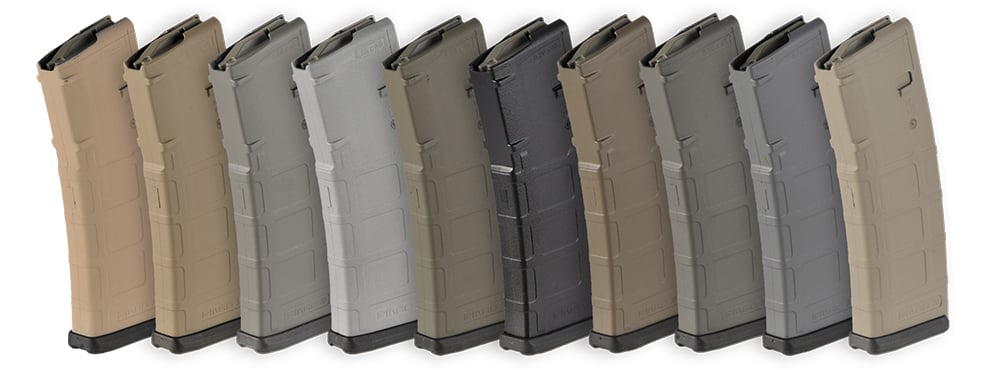
Compare Aluma-Hyde II colors applied to actual magazines. The examples below show how different finishes appear on the same type of surface.
Aluma-Hyde II colors shown on coated magazines. Actual appearance may vary with lighting, screen settings, surface preparation, and application.
Surface preparation, application temperature, and curing all affect the finished coating. Follow the instructions below and consult the product label and safety information before use.
Step 1: Prepare the Surface
Surfaces must be completely dry and free of oil, wax, dirt, loose paint, and other contaminants. No primer is required on properly prepared bare metal or anodized surfaces.
Clean previously painted surfaces with a suitable cleaner or degreaser. If abrasive blasting, ensure the blasting media is free of oil and silicone. Always test a small area for color compatibility and adhesion.
Preparation varies by material:
Unpainted Aluminum: Abrasive blast to achieve the desired surface texture.
Unpainted Steel: Remove rust by sanding or abrasive blasting.
Fiberglass: Sand lightly, then wash with soap and water or a quality cleaner/degreaser.
Wood: Seal or fill the surface before application. Aluma-Hyde II can be applied over polyurethane and varnish finishes, but not over linseed oil or tung oil finishes.
For best results, apply Aluma-Hyde II at temperatures between 70°F and 90°F. Do not apply below 65°F.
Shake the can vigorously until the mixing ball rattles, then continue shaking for an additional two minutes to ensure consistent color and texture.
Use the included Clean Out Nozzle before each use. Remove the standard spray nozzle and install the Clean Out Nozzle. Point the can in a safe direction and depress the valve to clear accumulated paint or residue from the pickup tube.
Once the discharge is clear and consistent, remove the Clean Out Nozzle and replace the standard spray nozzle before applying the finish. The Clean Out Nozzle is not intended for finish spraying.
Step 3: Apply Aluma-Hyde II
Hold the aerosol can approximately 12 inches from the prepared surface and fully depress the spray valve. Shake the can periodically during application to maintain consistent color and texture.
If additional coats are required, apply them within the initial 30-minute recoating window. After that window has passed, allow the coating to cure for 10 to 14 days before applying another coat.
Allow the coating to cure fully before putting the finished part into service. Drying and curing times vary depending on coating thickness, temperature, and humidity.
Touch Dry: Approximately 10 to 15 minutes.
Handling: Wait at least 24 hours before extensive handling.
Recoating: Apply additional coats within 30 minutes, or allow 10 to 14 days of curing before recoating.
Air Curing: Circulating warm air up to 90°F or placing the part in direct sunlight can help reduce curing time.
Accelerated Curing: Existing product instructions specify baking the coated part for 3.5 hours at 195°F. This method is appropriate only for heat-tolerant components and must follow applicable product safety instructions. Allow the part to cool before recoating.
Clean Out Nozzles & Maintenance
Each can of Aluma-Hyde II includes a Clean Out Nozzle designed to clear partially hardened paint from the pickup tube and help prevent clogs, sputtering, and inconsistent spray patterns.
Additional Clean Out Nozzles are available separately:
Single Clean Out Nozzle: Item #430107431
12-Pack Clean Out Nozzles: Item #084179004
Clean Out Nozzles are for clearing the pickup tube only and are not intended for finish spraying.
Aluma-Hyde II Application Guides & Videos
Brownells Gun Tech Caleb Savant demonstrates surface preparation, application, camouflage patterns, and other finishing techniques in our instructional series.
Aluma-Hyde® II garners mixed feedback, with many users appreciating its cost-effectiveness and ease of application, while others encounter issues with nozzle clogging and inconsistent color matching, particularly with the FDE variants. Durability after curing is generally praised, though some users report chipping and flaking over time. Overall, users recommend proper prep and caution for the best results.
What Reviewers Are Saying
Application Process
70%
Many reviewers emphasize the importance of following the application instructions precisely, including thorough cleaning and allowing adequate cure time. Users highlight that successful application often requires shaking the can extensively and avoiding excessive heat when curing.
Durability
65%
The durability of Aluma-Hyde® II is frequently mentioned, with many users noting it holds up well under regular use. However, some express disappointment when experiencing chipping or wear, especially in high-friction areas.
Color Match
60%
Color consistency is a significant concern. Several users report discrepancies between the color on the cap and the actual paint, particularly with variants like Coyote and FDE. Aluma-Hyde II is described as closer to Sage or light tan rather than the expected hues.
Nozzle and Clogging Issues
55%
Numerous reviews highlight issues with the spray nozzles clogging shortly after use, leading to spattering or inconsistent application. Users recommend purchasing extra nozzles as a precaution.
Value for Money
75%
Despite the mixed feedback, many users find Aluma-Hyde® II to be a cost-effective alternative to professional coatings like Cerakote. The majority feel that it delivers adequate performance for the price, especially for DIY projects.
Customer Photos & Videos
1
Not Good
A painted a blued rifle with this product. Steel wool all the metal so that it was pretty much better and thoroughly wiped it down with acetone.
1
Spray can will it work and no response from Customer Service..
I have purchased a CNA of Wolf Grey (the best color) and had no issues using it on an AR pistol build. I wanted to try this color out, but the can would not spray even after warming and trying other known working nozzles. I reached out to customer service for resolution and received no response. I expected more from Brownells
1
Bad, NOT Coyote
Order says Coyote, can says Coyote, but when i put what i sprayed next to something Coyote, it definitely aint Coyote. So incredibly disappointing. Disnt catch it in time. Even if I did and tested better, if you havebto test something it means you dont trust them. I definitely wont trust this product or Brownells again. On a positive note this is a better FDE than the alumahyde i used on another rifle. Its more than hit and miss with this product, its more miss than hit. (In pic: sprayed scope, stock is B5 coyote)
1
Spatters huge droplets no matter how you use it... Nope!
Tons of experience w/ Duracoat and never has such a disaster. Tried several methods and followed directions to the T but this still spattered big drops all over a brand new upper no matter how slow/light I tried to go. Took ~1hr cleaning it (mostly) off with solvent. That upper will end up looking worse than a Krylon. Never again.
I've used two consecutive cans of matte black Aluma-Hyde II recently on some small rifle parts, for which the spray pattern/quality was only acceptable for about half or less of the can's content (acceptable only if you don't mind an orange peel finish). At that point, the spray pattern became weak and sputtering, and finally stopped altogether. I immediately used a cleanout nozzle (2 good long blasts) and changed to a brand-new replacement painting nozzle, but the cans still would not spray. This is despite following Brownell's product directions to the letter. This is very disappointing performance, not to mention that much of my prep work went to waste, and the cost is $20 plus shipping per can. I can't recommend this product. I have one more can left, and I hope it works better. After that, I'll just use home-center rattle can epoxy paint.
1
Going back to Dura coat
I was restoring an old gun and removed all the old bluing and rust. I used a really good brand of cleaner-degreaser. The paint puddled on the metal and glumped. I followed the instructions to a T. There was not, one smooth coat of paint on the barrel or receiver. I should have asked for a refund, but I bought it back some time ago, as I was working on other jobs that came in before this one. Dura coat is definitely my choice from now on. Yes, my shop is very well heated, so that was not the issue, plus I shook the death out of the can. I'm not a rookie!! very disapointed.
1
Bad Paint
Paint sprayed out in streams and is not usable. Old
1
trash
this is the third time using this product. I am a gunsmith with almost 30 years on the bench refinishing firearms. 3 out of 3 times following directions to the letter and all I get is black garbage out of the can ,sprays like undercoating instead of a firearm finish. I spray all current finishes and have excellent results. But everytime I give this canned tar a try all I get is a reprep job.
1
Why is Coyote Brown not even close
Let me begin by saying that there is accountability from my end to be had. One of the 2 photos depicting Coyote Brown is beside a magazine that it presumably painted and shows how light the color really is. I can accept that if I looked a bit harder, I should’ve know that this was not the product for me. Thats where my accountability ends. The primary photo that the site defaults to when searching up the color shows a can that is way darker. Perhaps the lighting was off when they took the two photos? More importantly, the default photo is *way* closer to the commonly expected color of what we all think when we imagine of coyote brown. A darker, vibrant orangish hue. AR-670-1 boots are coyote brown. The issued SOPMOD B5 stocks are coyote brown. Issued Marine gear is coyote brown. They may not all be the same shade, but they are all characterized by those same 3 things I listed. Brownells seems to think that a khaki that is just another attempt at trying to get Magpul’s FDE is coyote brown. Why did you guys do this. Why did you make yet another khaki color. Coyote brown is not khaki. FDE is khaki. Why were the two cans listed on the photos taken in such different lighting? Do better
1
Alumahyde terrible results !
I have used many finishing products in my career and found the Alumahyde to be the worst ever. The spray splattered and ruined my project. I'm going to have to bead blast it off. Yes I followed the directions exactly.