




Basic Sniper School Experience Hight Threat Training Group
Inside a Five-Day Basic Sniper Course
What does it take to complete a Basic Sniper Course?
Caleb and Jude spent five days attending High Threat Training Group's Basic Sniper Course at the Brownells Big Springs Range, training alongside law enforcement officers under veteran instructor KP Robinson. While this session was conducted for law enforcement personnel, High Threat Training Group also offers a civilian Basic Sniper Course that teaches the same marksmanship fundamentals and long-range shooting skills while omitting the law enforcement-specific legal and tactical instruction.
The result is a demanding course built around developing disciplined shooters through repetition, coaching, and practical application.
Day One: Building the Foundation
The course begins in the classroom, where students cover safety, equipment, rifle setup, and the responsibilities of a sniper. Law enforcement attendees also receive instruction on legal considerations and operational topics before moving to the range.
The first live-fire session focuses on establishing a precise rifle zero. Every drill that follows depends on a reliable zero, making this one of the most important steps of the week.
Day Two: Mastering the Fundamentals
The second day is dedicated almost entirely to fundamentals.
Students work in shooter-observer pairs, firing carefully controlled groups at 100 yards while their partner watches impacts and provides feedback. Every shot reinforces breathing, natural point of aim, trigger control, follow-through, and communication between the shooter and observer.
As the day progresses, students repeatedly rebuild their shooting position between shots, forcing them to establish a stable firing position from scratch rather than relying on one that has already been built.
Day Three: Positional Shooting and Distance
Once the fundamentals are established, the course expands into positional shooting and extended-range engagements.
Students learn to build stable shooting positions from barricades, gates, tables, and improvised supports while engaging targets from 100 to 500 yards. Wind calls, elevation adjustments, holdovers, and observation of impacts become increasingly important as distances increase.
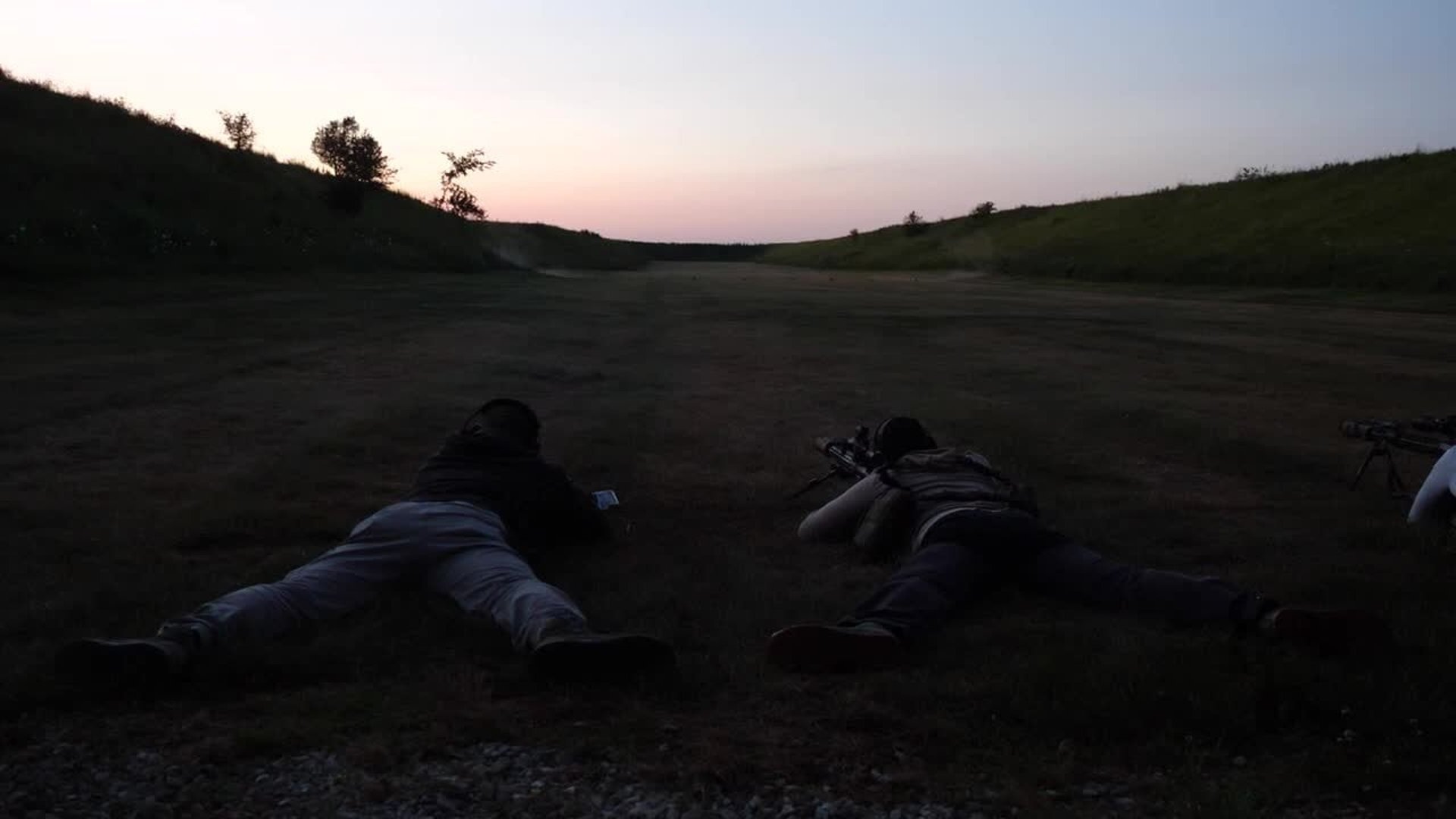
Low-light shooting exercises further reinforce efficient position building and disciplined shot execution.
Day Four: Advanced Sniper Skills
The fourth day introduces additional challenges designed to improve problem-solving under pressure.
Students intentionally create shooter-induced errors, learn to recognize scope shadow, engage unknown-distance targets, and refine observation techniques while continuing to reinforce the fundamentals established earlier in the course.
The training culminates in a demanding sniper qualification that combines precision shooting, barricade work, positional shooting, reloads, malfunction clearances, and strict accuracy standards.
The Importance of Repetition
One of the biggest lessons throughout the course is that consistency comes from repetition.
Every drill reinforces the same core skills: build a stable position, establish a proper sight picture, press the trigger without disturbing the rifle, observe impacts, communicate with your partner, and make corrections based on what you see.
Those simple principles become increasingly effective through structured practice.
Learning From Experience
Instructor KP Robinson brings decades of law enforcement and SWAT experience as a sniper, sniper team leader, and instructor.
Rather than focusing solely on long-range shooting, KP emphasizes disciplined fundamentals, observation, communication, and deliberate practice. Those principles form the foundation of the Basic Sniper Course and carry over to competition shooting, hunting, and civilian long-range marksmanship alike.
Final Thoughts
The Basic Sniper Course demonstrates that becoming a capable long-range shooter is about much more than stretching the distance.
It is a systematic process built on solid fundamentals, careful observation, disciplined communication, and deliberate practice. Whether attending the law enforcement Basic Sniper Course or the civilian Basic Sniper Course, students leave with a stronger understanding of rifle marksmanship and a repeatable process for making accurate hits under a wide range of conditions.
