



Competition AR Build (Trijicon, Magpul)
Competition AR-15 Build for Tactical Games and Practical Rifle Shooting
In this Brownells Tech Tip, Caleb walks through a complete lightweight AR-15 build designed specifically for competition shooting. Instead of building another duty-focused rifle, this setup emphasizes speed, handling, reduced weight, and practical performance for events like Tactical Games, Gunfighter Gauntlet, and other action rifle competitions.
The rifle is chambered in .223/5.56 and built around a lightweight component selection that still maintains durability and reliability. Throughout the build, Caleb explains not only how to assemble the rifle, but also why certain components make sense for a competition-oriented setup.
Lower Receiver Assembly and Competition Controls
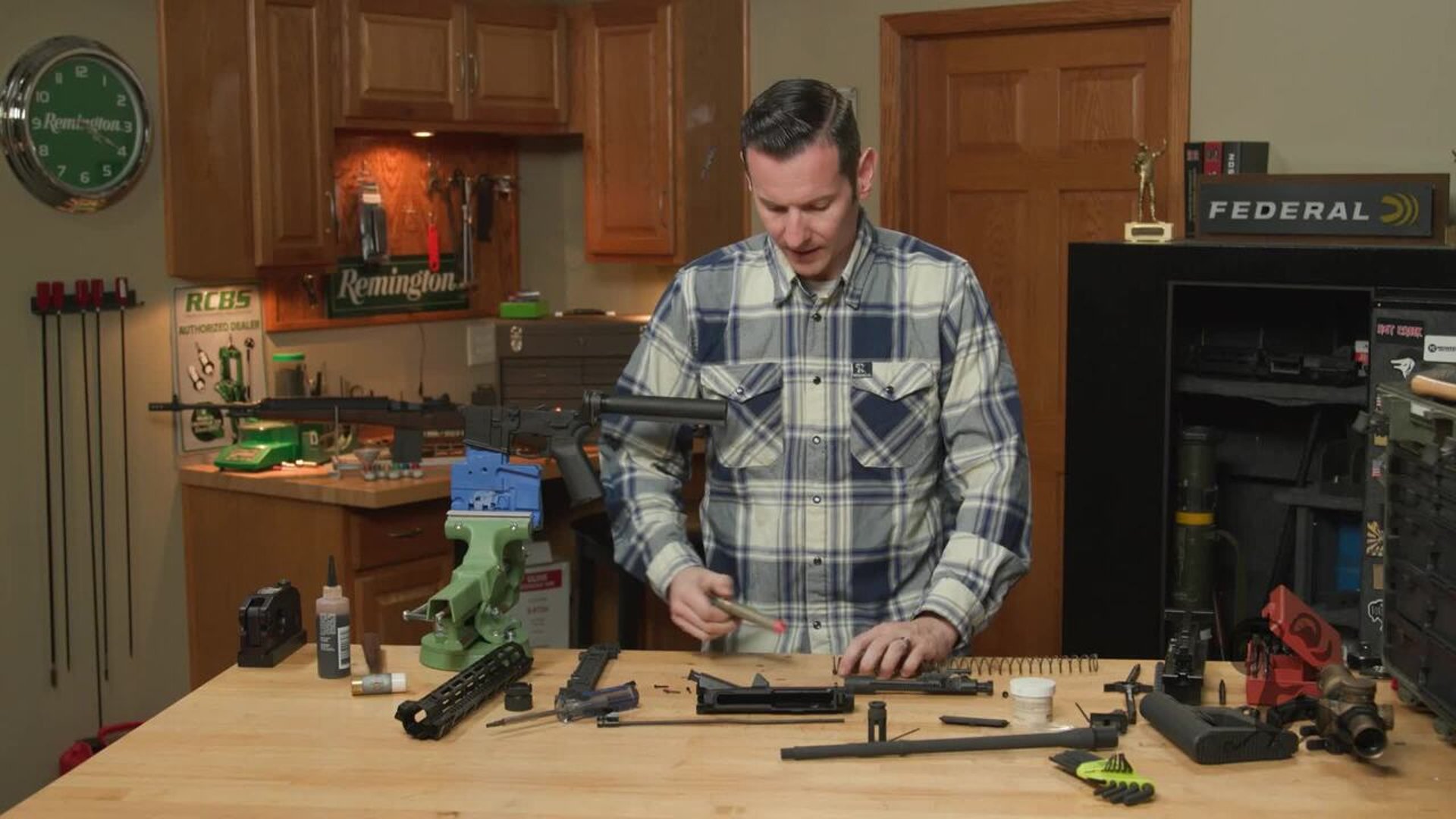
The build begins with a standard mil-spec lower receiver secured in a Midwest Industries lower receiver vise block. Caleb quickly moves through the installation process while highlighting several upgrades aimed at improving speed and ergonomics during competition use.
A Magpul extended magazine release is installed first. While oversized controls are not always ideal for duty rifles due to accidental activation concerns, they work well on competition rifles where reload speed matters more than minimizing snag hazards.
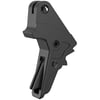
The trigger selected for this build is the Rise Armament RA-100 two-stage trigger. Unlike a cassette-style trigger, this unit installs similarly to a standard mil-spec trigger while providing a lighter, cleaner trigger pull that benefits fast and accurate shooting.
An ambidextrous Magpul safety selector is also installed with a short-throw configuration. Caleb explains the advantages of using different paddle lengths depending on whether the shooter is left-handed or right-handed. Small ergonomic details like selector paddle placement can significantly improve comfort during long shooting sessions.
Grip, Trigger Guard, and Rear Receiver Setup
The rifle uses a Magpul MOE+ grip with a rubber overmold for added comfort and control. During installation, Caleb demonstrates a useful trick using grease to retain springs and detents during assembly.
The Magpul trigger guard installation follows, using set screws instead of traditional roll pins. This method simplifies installation while still providing a secure fit.
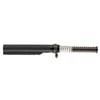
For the rear receiver assembly, Caleb installs an A5-length receiver extension paired with a rifle-length Geissele Super 42 spring and A5 buffer. This setup helps smooth out recoil impulse and improve cycling characteristics.
One of the most important assembly points covered is staking the castle nut. Caleb strongly emphasizes that properly staking the castle nut prevents it from loosening over time under hard use
Upper Receiver and Barrel Installation
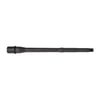
The upper receiver uses a standard mil-spec forging that has already been lapped for improved barrel fitment. Caleb installs a Brownells 14.5-inch pencil-profile barrel chambered in .223 Wylde.
The lightweight pencil barrel helps reduce front-end weight while still maintaining durability through chrome lining and phosphate finishing. A lighter front end allows faster target transitions and reduced fatigue during movement-heavy stages.
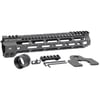
A Midwest Industries lightweight handguard is paired with the barrel. Instead of a full-length Picatinny top rail, this handguard uses a trimmed-down design with strategically placed rail sections to reduce unnecessary weight.
The barrel nut is torqued to specification before moving on to the gas system.
Adjustable Gas Block and Handguard Alignment
A Faxon adjustable gas block is selected for the rifle to fine-tune recoil and cycling performance. Because the rifle uses a pencil barrel with a .625 gas journal, the gas block must match that dimension correctly.
Caleb explains how to visually align the gas system by centering the gas tube within the upper receiver channel. He also demonstrates using the handguard itself as a visual reference for gas block alignment.
After alignment is confirmed, the handguard is installed and torqued down evenly while ensuring the top rail stays aligned with the receiver
Bolt Carrier Group, Charging Handle, and Function Check
The rifle uses a KAK K-Spec bolt carrier group combined with a Rise Armament ambidextrous charging handle. Both components are lubricated prior to installation.
Once the upper and lower receivers are joined together, Caleb performs a full function check to verify proper safety and trigger operation before installing optics and accessories.
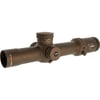
The optic chosen for this rifle is a Trijicon Credo LPVO mounted in Midwest Industries rings. Caleb also points out an important mounting technique by pushing the optic fully forward in the mount slots before tightening to ensure recoil keeps the optic seated consistently against the rail lugs.
Competition Accessory Placement and Final Setup
The final stage of the build focuses on practical competition accessories. A Magpul angled foregrip is installed based on natural hand placement rather than arbitrary positioning.
A barricade stop is added close to the support hand position rather than at the muzzle end of the rifle. Caleb explains that when bracing against barriers, the handguard should contact the barricade instead of the barrel to avoid unwanted barrel flex and point-of-impact shifts.
Magpul M-LOK rail covers are trimmed to fit only where needed, reducing unnecessary bulk while still improving grip and comfort.
Finally, a QD sling mount is installed farther forward on the handguard for better sling positioning during movement and transitions.
Final Thoughts on the Lightweight AR-15 Build
This lightweight competition AR-15 combines practical reliability with modern performance upgrades tailored toward action shooting disciplines. By carefully selecting lightweight but durable components, the build maintains excellent handling characteristics without sacrificing functionality.
The completed rifle offers a smooth recoil impulse, fast handling, adjustable ergonomics, and a practical LPVO setup suitable for a wide variety of rifle competition formats.