223/5.56 Need This Tool!
If you are a beginner loading 223/5.56 Ammo this is a must have tool! This tool helps with setting up your bullet setting die so you do not over crimp & end up with FTF!!
How Did I Get Along Without It?
I used this gauge to set up my resizing die rather than the "touch and back off" method. I didn't realize how far off I was and careful case prep improved my groups.
Best gauge to ensure saftey
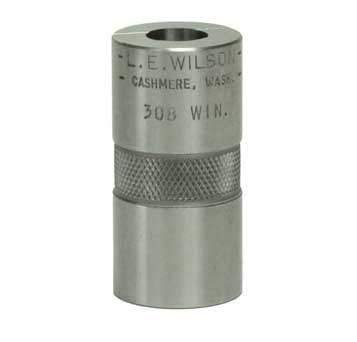
The Wilson Case Gauge, in any caliber, allows the individual to have the confidence and assurance that the prepped cases completed for reloading are within spec and will chamber correctly and safely. A must have for any reloader.
This ia a great tool
I don't know how I got along woith out it. These gauges are slick and will improve your shooting..
Well Made
Easy to use, well made and accurate.
easy, simple,accurate
reloading is easier and more accurate with the right tools
Some of the best money...
I've ever spent. I had several thousand cases to resize after I discover they do not fit in my AR-15. This little doo-dad tells me instantly with just a glance if I have set my dies to the correct location. Also indicates if case has been sized or not. To use, size your case and insert into comparator. If the head or the mouth sticks out, the case is too long. If the case fits flush to the inside/lower cuts, it WILL fit into ANY rifle for which it is chambered. A great tool. I'm glad I bought mine and I use it with regularity.
Best Cartridge Gauge
Best Cartridge gauge out there. Precise machining. Most gauges just check headspace. This one also checks for length to see if it needs trimming. Other brands don't have this feature. The only reason I gave it four stars was that it's a little pricey.
Incorrect Size Marking.
This gauge is excellent for determining whether case is within tolerance for head space and case length. The gauge I recieved was stamped for 260Rem as ordered. However, the gauge was actually machined to fit 243Win. It was returned for exchange. Otherwise I would give a 5.
Gaging point is shoulder/neck junction
The 6.5 Creedmoor gage I received, produced results very different than other case gages such as the Hornady and Sinclair models. For example, shoulder bumped 0.002" according to Sinclair, 0.012" Wilson. Whereas other gages reference from the shoulder/body junction, or somewhere in the middle of the shoulder, the Wilson gaging point is the shoulder/neck junction. The short of it is, shoulder bump of 0.002" as indicated by the Wilson gage will be undetectable using other gages. Since all of these gages recommend 0.002" bump for bolt-actions, they can't all be right.