



How To Make Rifle D.O.P.E.
Understanding Rifle DOPE and Ballistic Data
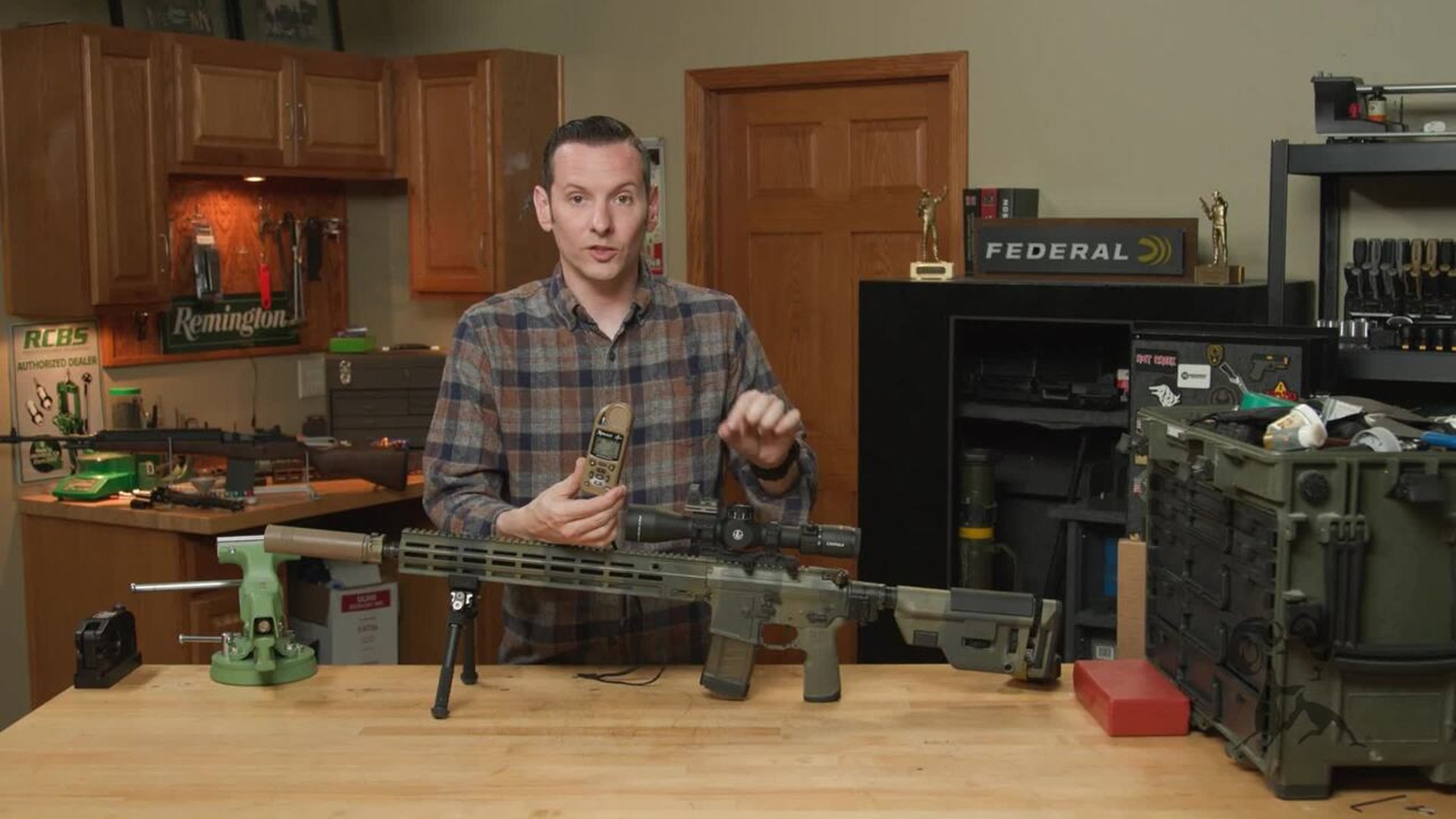
In this Brownells Tech Tip, Caleb explains how to collect accurate DOPE for your rifle and use that information to make consistent hits at distance. DOPE stands for “data on previous engagement,” and it refers to the elevation and wind adjustments required for accurate shooting at various ranges.
This process is essential for long range shooting, precision rifle competition, hunting applications, and even practical AR-15 setups. Reliable ballistic data allows shooters to predict bullet trajectory and make accurate corrections before taking the shot.
Starting with a Proper Rifle Zero
Before any ballistic calculations can be trusted, the rifle must have a precise zero. Caleb stresses that an approximate zero is not good enough. If the rifle is believed to be zeroed at 100 yards but is actually zeroed at 110 yards, the ballistic data will be incorrect from the start.
Consistency is also important when choosing units of measurement. Caleb primarily works in meters, but yards work equally well as long as all data entered into the ballistic calculator matches the same unit system.
A properly confirmed zero forms the foundation for every ballistic calculation that follows.
Essential Tools for Building a DOPE Card
Several tools are required to gather accurate ballistic information. The most important is a ballistic calculator. Caleb prefers Applied Ballistics through his Kestrel weather meter and Garmin Tactix smartwatch, both of which can display rifle data and firing solutions directly.
A laser rangefinder is also critical because exact target distance directly affects bullet trajectory calculations. Caleb explains that nearly any quality rangefinder can work as long as it provides consistent distance measurements.
A chronograph is another major advantage because it measures actual muzzle velocity instead of relying on factory ammunition estimates. Caleb uses the Garmin Xero chronograph because of its compact size and easy integration with other Garmin devices.
Entering Ammunition and Rifle Data
Once the rifle is properly zeroed and muzzle velocity data has been collected, the next step is entering rifle and ammunition information into the ballistic calculator.
Caleb uses Hornady Frontier 75 grain boat tail hollow point ammunition as an example throughout the video. Important information entered into the calculator includes muzzle velocity, bullet weight, bullet diameter, ballistic coefficient, zero distance, rifle twist rate, and optic height over bore.
One critical point Caleb explains is that 5.56 and .223 projectiles actually use a .224 bullet diameter, not .223. Small details like this matter when building accurate ballistic profiles.
Understanding G1 and G7 Drag Models
The video also explains the difference between G1 and G7 drag models. Caleb points out that modern long range boat tail projectiles generally work better with the G7 drag model because it more accurately represents modern bullet shapes.
Older flat-base projectiles are often better suited for G1 calculations. Choosing the correct drag model can significantly affect elevation holds at longer distances.
Even small differences in ballistic calculations can determine whether a shot impacts steel or misses entirely.
Measuring Height Over Bore Correctly
One of the most commonly misunderstood measurements in ballistic setup is height over bore. Caleb demonstrates how to correctly measure from the centerline of the rifle bore to the centerline of the optic.
Many shooters incorrectly measure from the top rail to the optic, which produces inaccurate data. Proper height over bore measurements help the ballistic calculator accurately predict trajectory throughout the bullet’s flight path.
Building a Range Card
After entering rifle and ammunition information, the ballistic calculator generates a range card. This card contains elevation holds and wind holds for various distances.
Caleb explains how these values can be written onto a physical DOPE card or stored digitally. The range card allows shooters to quickly reference holdovers without recalculating every shot manually.
The ballistic calculator can also generate wind corrections for multiple wind speeds, helping shooters estimate drift during changing conditions.
Confirming and Truing Ballistic Data
Once initial data is generated, the rifle must be tested at distance to confirm accuracy. Caleb demonstrates how to walk the rifle out to progressively longer distances while comparing actual impacts against predicted holds.
If impacts consistently land high or low at longer distances, the ballistic data must be trued. This can be done by adjusting muzzle velocity or ballistic coefficient values inside the calculator.
Shooters without a chronograph can use this process to estimate a more accurate muzzle velocity. Shooters with verified chronograph data may instead fine-tune ballistic coefficient values slightly to match real-world impacts.
Accounting for Wind, Angle, and Direction
Environmental factors also play a major role in long range shooting. Caleb explains that uphill and downhill shooting angles significantly affect point of impact and must be accounted for inside the ballistic calculator.
Wind holds become increasingly important at longer distances, especially in unpredictable conditions. While wind reading itself is a more advanced topic, understanding how the ballistic calculator generates wind corrections is an important first step.
Target direction can also matter at extreme distances because of Earth rotation and other environmental influences.
Final Thoughts on Long Range Shooting and Rifle Data
Building accurate DOPE for a rifle requires careful measurements, quality data, and real-world confirmation at distance. Caleb emphasizes that accurate information entered into the ballistic calculator produces accurate firing solutions in return.
Once the rifle’s ballistic profile is properly established, shooters can confidently engage targets at extended distances with consistent results.
This video provides a strong foundation for anyone beginning to explore long range shooting, ballistic calculators, and precision rifle data collection.