



Tech Tip : Patterning a Shotgun
HOW TO PATTERN A SHOTGUN AND WHY IT MATTERS
Patterning a shotgun is one of the most overlooked steps in preparing for a hunt. In this Brownells Tech Tip, Caleb explains a straightforward approach that removes unnecessary complexity and focuses on practical results that translate directly to the field.
SIMPLE TARGET SETUP THAT WORKS
You do not need expensive or specialized targets to pattern your shotgun. A standard target stand with cardboard backing and a large sheet of paper is more than enough. Add a small aiming point roughly the size of your intended target zone, such as a turkey head, and you are ready to begin.
This approach saves money and still provides a clear view of your shot pattern.
WHY PATTERNING YOUR SHOTGUN IS IMPORTANT
Many shooters stick with a specific ammunition simply because it worked once. While that is understandable, different loads can produce very different patterns in the same shotgun.
By testing multiple types of ammunition, you may find a load that delivers tighter and more consistent patterns. That can directly translate into more successful shots and fewer missed opportunities in the field.
TESTING DIFFERENT AMMO AND CHOKE COMBINATIONS
Ammunition and choke tubes both play a major role in how your shotgun performs. A tighter choke will concentrate your pattern, while a more open choke spreads it out.
Testing a few different loads with different choke setups allows you to identify what works best in your specific shotgun. You do not need to test everything on the market, but trying two to four options is a practical starting point.
SHOOTING FROM A STABLE POSITION
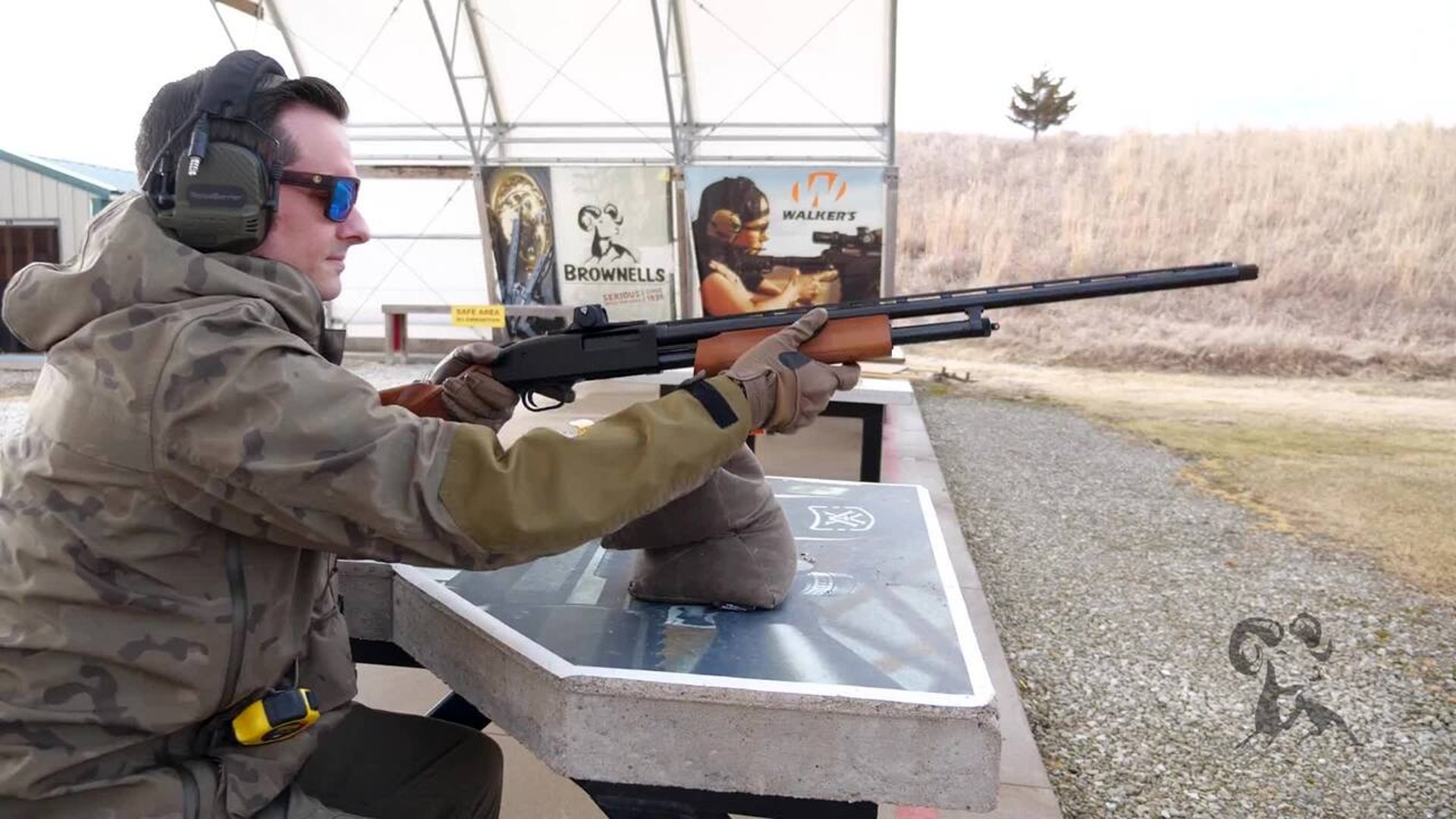
Consistency is key when patterning. Using a stable rest helps remove human error and ensures that what you are seeing on the target reflects the performance of your shotgun, not inconsistencies in your shooting.
A simple shooting bag or support under the shotgun is enough to improve stability and accuracy during testing.
HOW TO READ YOUR SHOT PATTERN
After firing a shot, focus on the overall distribution of pellets rather than counting each individual impact. The goal is to identify the densest portion of the pattern and determine how it aligns with your point of aim.
If the majority of pellets are centered around your aiming point, your setup is effective. There is no need to overanalyze or perform detailed measurements for most hunting applications.
IDEAL DISTANCES FOR DIFFERENT GAME
For turkey hunting, patterning at 25 to 35 yards provides a reliable baseline. At this distance, you want a tight, concentrated pattern that delivers maximum impact in a small target area.
For duck hunting, patterning around 35 to 40 yards is more appropriate, with a slightly more open pattern to account for moving targets.
For pheasant hunting, a range of 25 to 30 yards works well, again using a more open choke compared to turkey setups.
USING THE 30 INCH RULE AS A GUIDE
A common reference point is a 30 inch circle. Instead of physically drawing it, you can estimate whether most of your pellets fall within that area.
This gives you a quick and practical way to evaluate pattern density without unnecessary steps or calculations.
TESTING AT MULTIPLE DISTANCES
Do not limit yourself to a single distance. Once you find a load that performs well, test it at both closer and longer ranges. This helps you understand how your pattern opens up and ensures consistent performance across realistic hunting scenarios.
FINAL THOUGHTS ON SHOTGUN PATTERNING
Shotgun patterning does not need to be complicated. Fire a shot, evaluate the pattern, and make decisions based on what you see. The goal is to find a combination of ammunition and choke that delivers consistent, effective results.
By keeping the process simple and focusing on real world performance, you can confidently prepare your shotgun for any type of hunting.