



Should You Hunt With Subsonic Ammo?
CAN YOU HUNT WITH SUBSONIC AMMO?
As suppressors continue to grow in popularity among hunters, more shooters are experimenting with subsonic ammunition for deer hunting and other game applications. One of the most common questions is whether subsonic loads provide enough terminal performance for ethical hunting.
In this episode of SmithBusters, Caleb and Steve test subsonic 350 Legend ammunition in FBI ballistic gel to see exactly how it performs compared to a traditional supersonic hunting load.
THE TEST SETUP
For this ballistic gel test, the rifle used is a suppressed 350 Legend AR-platform hunting rifle set up for Iowa deer hunting.
The subsonic load tested is Hornady Sub-X 350 Legend ammunition loaded with a 250 grain bullet specifically engineered for low-velocity expansion. Unlike standard rifle bullets that often rely on high velocity for proper expansion, the Hornady Sub-X line is designed to open reliably at subsonic speeds.
The test uses FBI ballistic gel blocks positioned at approximately 25 yards to evaluate penetration and expansion characteristics.
WHY SUBSONIC BULLETS ARE DIFFERENT
Traditional rifle bullets are often optimized for supersonic impact velocities. When velocity drops too low, some bullets may fail to expand properly and simply punch through a target with minimal energy transfer.
Subsonic hunting ammunition is different.
The Hornady Sub-X bullet uses specialized jacket construction and internal design features to promote expansion even at slower speeds. Combined with the heavy 250 grain projectile weight, the round is designed to maintain deep penetration while still creating an effective wound channel.
SUBSONIC 350 LEGEND BALLISTIC GEL RESULTS
The first test shot used the Hornady Sub-X subsonic load through a suppressor-equipped rifle.
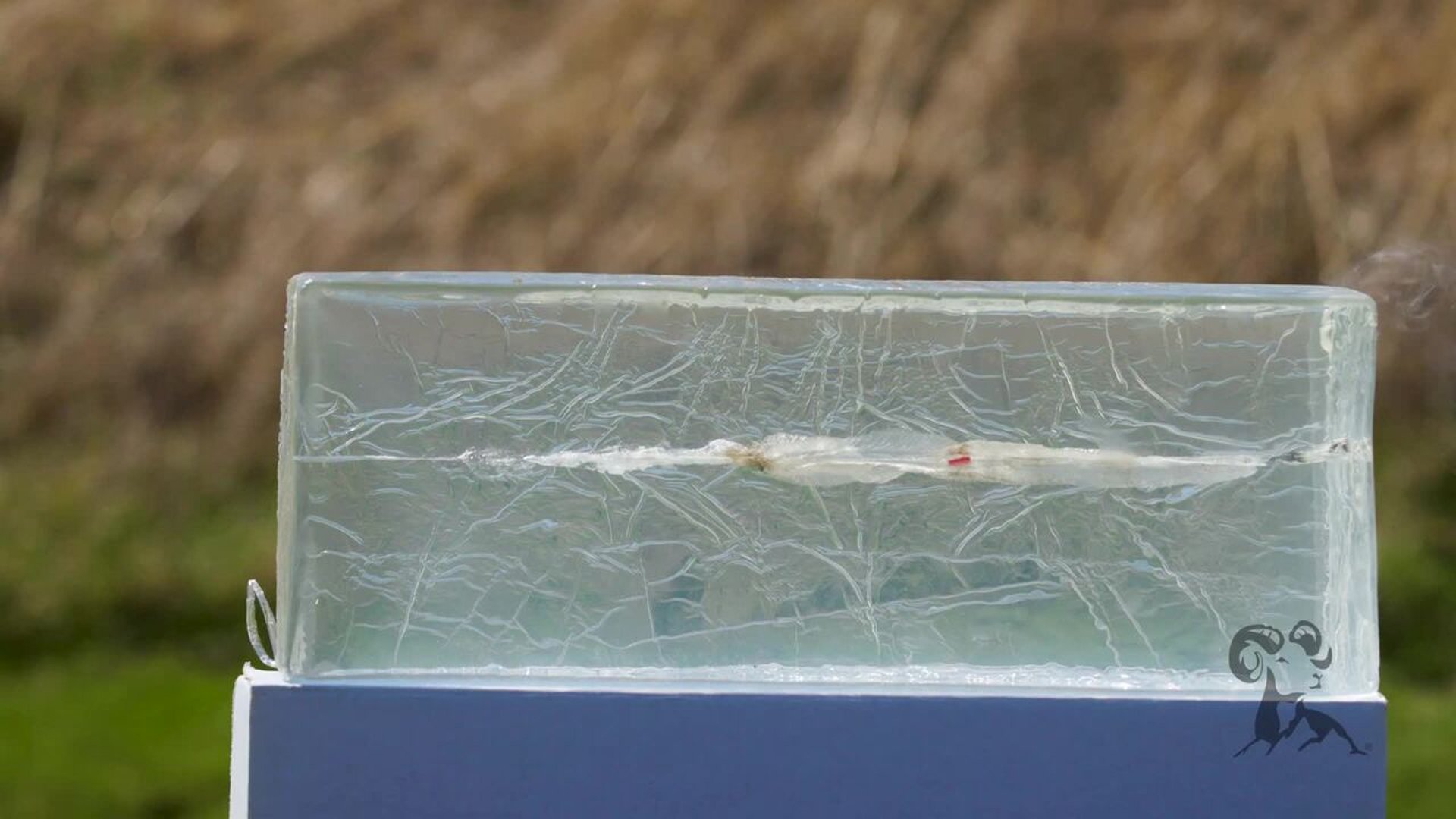
Even at subsonic velocity, the bullet completely penetrated the ballistic gel block while producing a substantial wound cavity. The recovered gel showed clear bullet expansion and rotational energy throughout the wound channel.
The heavy-for-caliber bullet maintained excellent momentum and penetration despite the lower velocity.
This is one of the key advantages of heavy subsonic bullets. While they do not rely on speed, they compensate with mass and controlled expansion.
COMPARING SUBSONIC VS SUPERSONIC PERFORMANCE
To compare results, Caleb also fired a proven supersonic handload that had already been used successfully on deer.
As expected, the supersonic load produced more immediate expansion and more violent disruption in the front portion of the gel block. However, both loads achieved complete penetration and demonstrated effective terminal performance.
The biggest difference was simply how quickly expansion occurred within the block.
The subsonic round penetrated slightly more gradually while still creating a significant wound channel throughout its path.
SUPPRESSORS AND SUBSONIC HUNTING
One of the major reasons hunters choose subsonic ammunition is suppressor performance.
Subsonic rounds eliminate the supersonic crack generated by traditional rifle ammunition, resulting in a noticeably quieter shooting experience. This can reduce shooter fatigue, improve communication in the field, and make hunting more comfortable overall.
In this test, the rifle was equipped with a Dead Air Mojave 9 suppressor, which handled both subsonic and supersonic ammunition effectively.
FINAL VERDICT
Based on the ballistic gel performance shown in this test, Caleb and Steve conclude that subsonic ammunition can absolutely be effective for hunting when paired with the correct bullet design.
The key is using ammunition specifically engineered for subsonic expansion rather than standard bullets that may not perform reliably at lower speeds.
The 350 Legend Hornady Sub-X load demonstrated strong penetration, reliable expansion, and overall performance that would inspire confidence for deer hunting applications.
As always, proper shot placement and understanding your effective range remain critical no matter what ammunition you choose.