



Top Tools Every Gunsmith Should Have
TOP GUNSMITHING TOOLS EVERY BENCH SHOULD HAVE
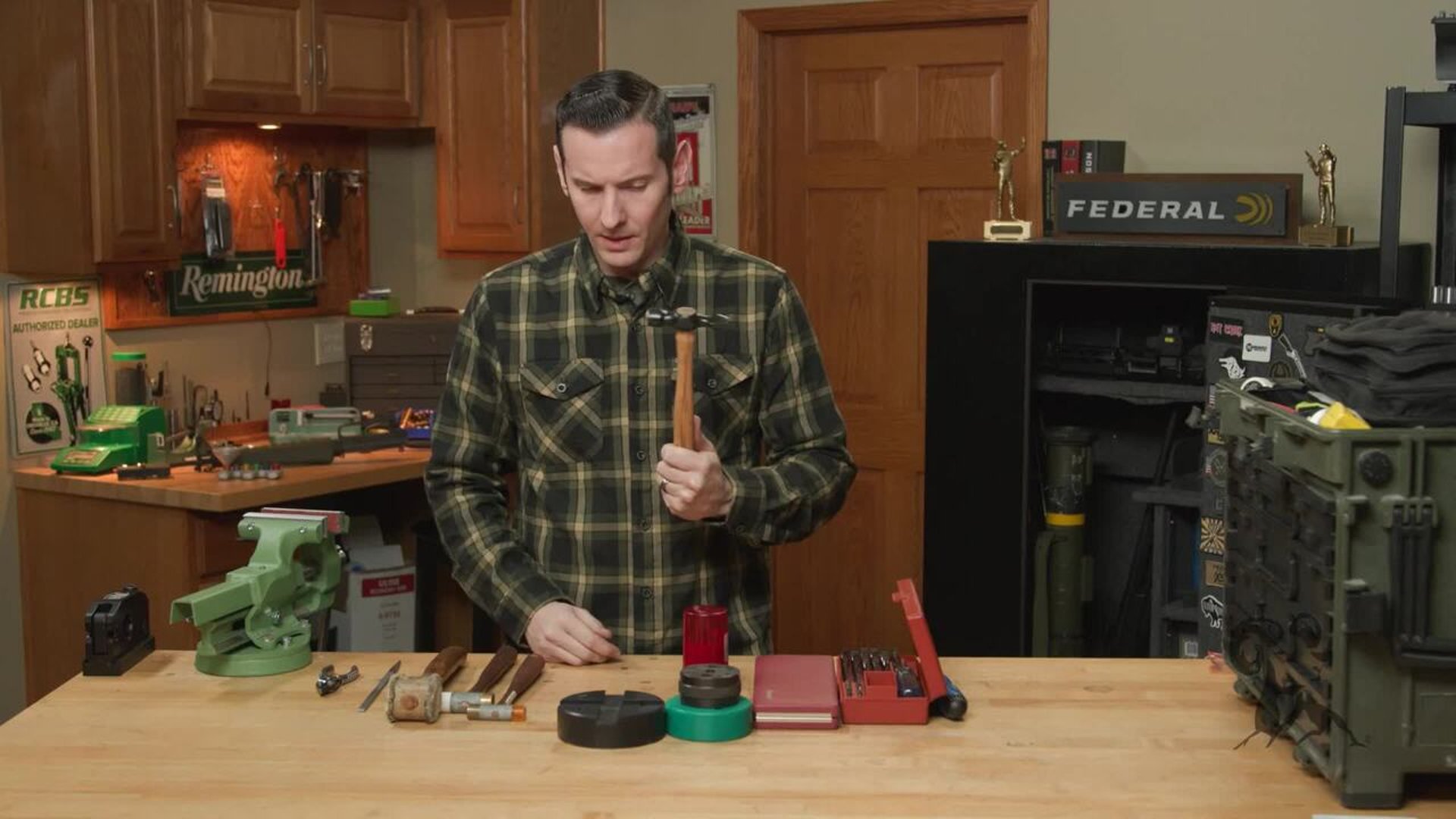
In this Brownells Tech Tip, Caleb breaks down the core tools that almost every gunsmith should keep on the bench. The key point in this video is that while gunsmithing has plenty of specialties, some tools are useful no matter what kind of firearms you work on. Whether you are focused on pistols, bolt guns, older sporting arms, or general repair work, these are the kinds of tools that keep showing up in real jobs.
Caleb also brings a practical perspective to the topic. He spent a lot of time doing general repairs on obsolete firearms, which meant measuring worn parts, making replacements, driving stubborn pins, and working carefully around valuable finishes. That kind of work quickly teaches you which tools hold up and which tools cost you time.
A QUALITY SCREWDRIVER SET IS THE FOUNDATION
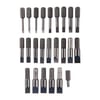
The first tool Caleb calls out is the one he considers the staple of every gunsmithing bench: a good screwdriver set. In this case, that means the Brownells magnet tip system.
He explains that he has used cheaper screwdriver sets in the past, including sets that were fine for lighter use but did not hold up to daily shop work. Handles wore out, bits failed sooner, and the overall durability just was not there for high-volume gunsmithing.
That matters because screwdrivers do far more than just turn screws on a gun bench. In gunsmithing, they need to fit correctly, hold up under torque, and avoid damaging the firearm in the process. A poor screwdriver bit can slip or break, and when that happens on an expensive firearm, you are no longer just replacing a tool. You may be dealing with damaged screw slots or scratched bluing.
Caleb highlights the benefit of machined hollow-ground bits over cheaper cast or MIM-style bits. They are more durable, better suited to firearm screws, and far less likely to fail at the wrong time. He also points out a practical advantage of the Brownells system: when a bit does wear out or break, you can replace that individual bit instead of buying another full set.
For anyone building a real working bench, a quality gunsmith screwdriver set is not a luxury item. It is one of the first tools worth buying right.
GOOD CALIPERS SAVE TIME AND BAD MEASUREMENTS
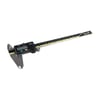
The next tool Caleb covers is a good set of calipers, specifically dial calipers. Digital calipers are useful, but he often prefers analog dial calipers for bench work.
In gunsmithing, measuring to the thousandth of an inch is common. That level of precision matters when fitting parts, diagnosing wear, checking diameters, or making replacement components. Caleb notes that when he was repairing obsolete firearms, a good pair of calipers was constantly in use because replacement parts often had to be measured or made from scratch.
The warning here is simple: do not cheap out on calipers. On lower-quality dial calipers, the internal gear system can wear out and start giving inconsistent readings. The tool may still look fine on the outside, but the measurements are no longer reliable. That is exactly the kind of problem that can waste time and create parts that do not fit.
A quality set of calipers is one of those tools that quietly earns its place through constant use.
PUNCHES ARE CONSUMABLE, BUT QUALITY STILL MATTERS
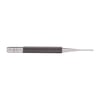
Punches are another everyday bench tool Caleb recommends without hesitation. There are plenty of specialized punches for specific jobs, but for a general-purpose punch set, he reaches for the Starrett set most often.
Punches are consumable tools. They wear, bend, and break, especially in smaller sizes. Caleb specifically points out that the 1/16 inch punch is the one most likely to need replacement because it sees so much use and can fail more easily under hard work.
Even so, quality still matters. A better punch lasts longer, stays straighter, and does the job more cleanly. He notes that he has tried a wide range of punches over the years and broken plenty of them, but these are the ones he breaks the least. That says a lot for a bench tool that sees regular abuse.
For firearm disassembly, pin work, and general bench use, a reliable punch set belongs near the front of the bench.
HAMMERS THAT ACTUALLY EARN THEIR PLACE
Once punches come out, hammers are not far behind. Caleb covers several styles he relies on, starting with a cross peen hammer that he uses more than anything else.
Even though the cross peen shape itself is not always the main feature being used in finer bench work, the hammer as a whole is a favorite because it feels right for driving punches and handling common shop tasks. It is the kind of hammer that becomes the first one you grab.
He also highlights double-headed hammers with brass on one side and Delrin or nylon on the other. These are extremely useful because they let you move steel parts, drive pins, or adjust components without instantly damaging the surface finish. If he had to choose one all-around hammer for gunsmithing, Caleb says it would likely be the larger brass and Delrin model because it handles such a wide range of tasks.
He also mentions a rawhide mallet, which is especially useful for stock work, including breaking free an action that has been bedded into a stock without chipping or damaging the surrounding material.
This part of the video is a good reminder that there is no single perfect hammer for every task, but there are definitely a few styles that cover most real gunsmithing work.
BENCH BLOCKS DO MORE THAN PROTECT THE BENCH
Bench blocks are easy to overlook until you start using them correctly. Caleb explains that a bench block is not just there to keep from damaging the bench top. It also helps support the workpiece and control energy transfer while you are driving pins.
That matters because if too much impact energy gets absorbed by the surface under the part, you have to work harder to accomplish the same job. A proper bench block keeps the work stable and directs the force where it needs to go.
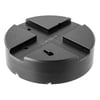
He shows a Delrin bench block that is especially useful for pistol work, where you may need to support a slide while drifting sights or driving pins. He also covers a more general-purpose block that sees a lot of use across different firearms, as well as an all-steel bench block for particularly stubborn pins.
The steel version is not something you need for every task, but when you are dealing with a pin that simply does not want to move, it can make a big difference.
FILES STILL MATTER ON A GUN BENCH
Files are another tool category Caleb includes in the essentials list. Anytime metal needs to be removed carefully and under control, files come into play.
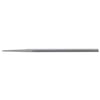
He briefly highlights one of his go-to files, a tapered double-cut Swiss-pattern file, and explains that no single file does every job. Coarser files remove material faster but leave more marks. Finer files cut slower but give more control and a cleaner finish.
That balance is part of what makes file selection important in gunsmithing. You want enough cutting ability to make progress, but enough control to avoid taking too much material or leaving unnecessary cleanup behind.
For fitting parts, shaping surfaces, and careful hand work, a small selection of quality files is well worth keeping on the bench.
PARALLEL PLIERS ARE BETTER THAN MOST PEOPLE REALIZE
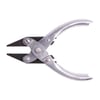
Pliers are another category where Caleb gets more specific than many people expect. While standard needle-nose pliers certainly have their place, he prefers parallel pliers for many bench tasks.
The benefit is in the jaws. Standard pliers pivot in a way that changes the jaw relationship as they open and close, while parallel pliers keep the jaws parallel to each other throughout the movement. That gives a more secure grip on small parts, especially round or delicate ones.
He also points out that the smooth-jaw versions help reduce the chance of marring a finished surface compared to standard serrated pliers. They are more expensive, but for precision bench work they are often worth the extra cost.
This is exactly the kind of tool that might seem optional until you use it regularly and realize how much cleaner and easier certain jobs become.
A REAL GUNSMITHING VISE CHANGES EVERYTHING
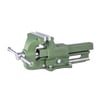
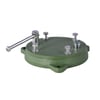
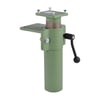
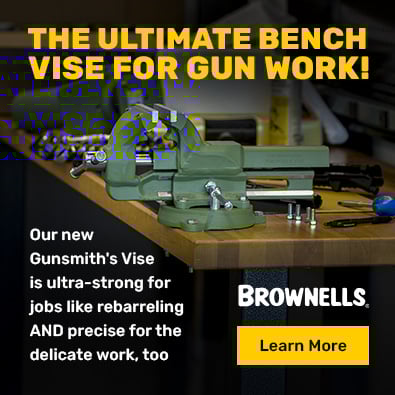
The last major tool Caleb covers is the vise, and he makes it clear that not all vises are equal. A good gunsmithing vise should behave more like a machinist vise than a loose, generic hardware-store vise.
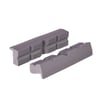
He specifically calls out the Brownells gunsmithing vise as one of his favorites. It is solid, precise, and compatible with a range of vise jaws for different jobs. He mentions that he often uses micarta jaws and aluminum jaws, depending on what he is holding.
That flexibility matters because a vise is not just there to clamp something down. It needs to hold parts securely without damaging them, support fine work, and stay stable when you are filing, fitting, or making adjustments.
He also shares a simple but useful trick: keeping a small magnet stuck to the vise so small screws and parts have a place to go while working. That is classic bench wisdom. Sometimes the little workflow details matter just as much as the larger tools.
FINAL THOUGHTS ON BUILDING A GUNSMITHING BENCH
This video is a strong overview of the bench tools that deliver the most value across a wide range of gunsmithing work. A quality screwdriver set, good calipers, dependable punches, the right hammers, solid bench blocks, useful files, parallel pliers, and a true gunsmithing vise are not flashy purchases, but they are the kind of tools that make almost every job easier.
The common thread through all of Caleb’s recommendations is durability and control. Gunsmithing is often about working carefully around tight tolerances, finished surfaces, and older parts that may be difficult to replace. The right tools help you work cleaner, safer, and with less frustration.
For anyone setting up a gunsmithing bench or upgrading a basic tool collection, this list is a very solid starting point.