


Product Spotlight: GBRS Group Optic Mounts
Introduction
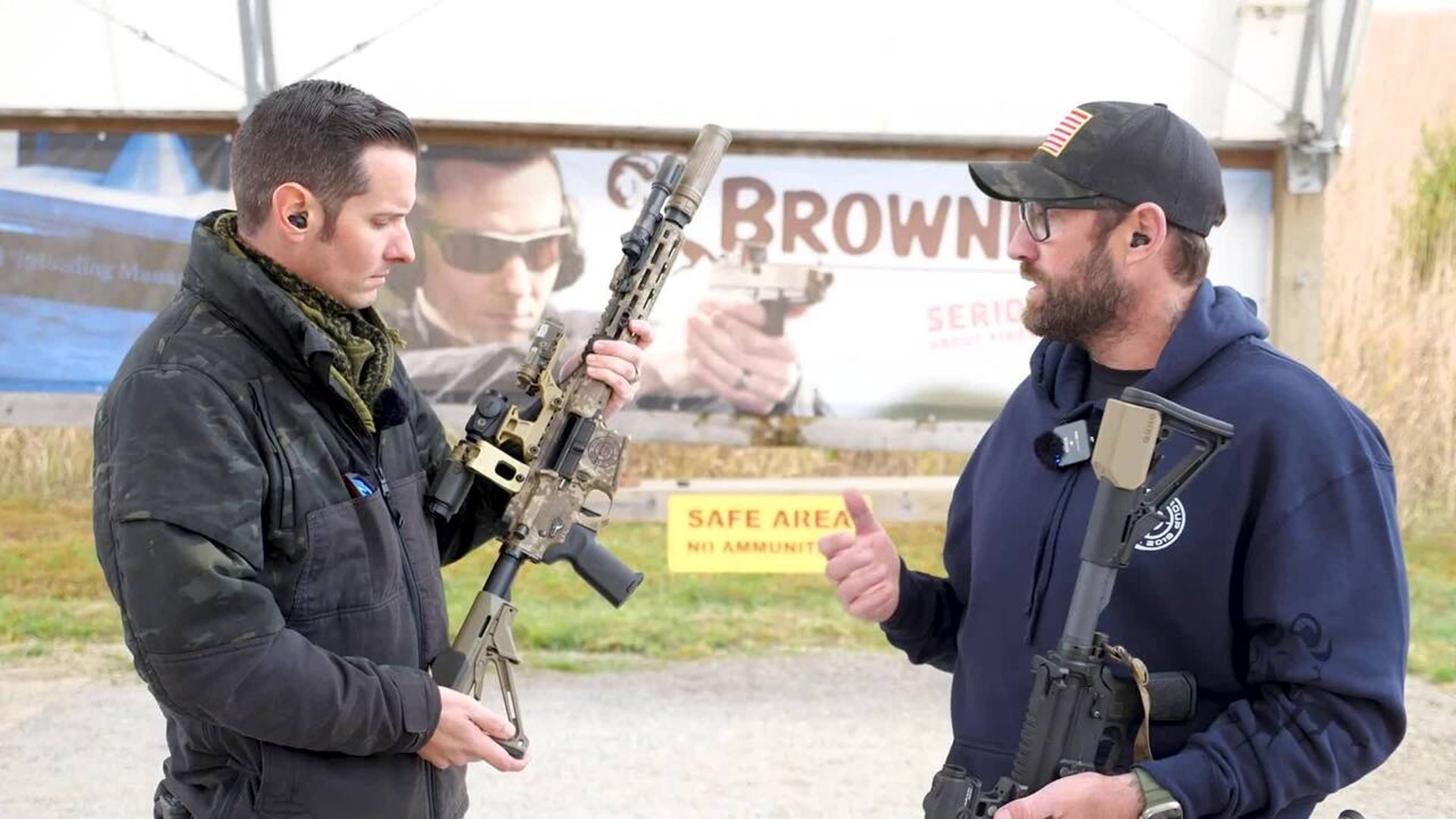
Caleb from Brownells is back with Cole from GBRS Group for a deep dive into the GBRS Hydra mount system. Designed for serious shooters and professionals, the Hydra offers both single and multi-optic configurations to meet the demands of a variety of mission sets and weapon setups. Today’s video covers design philosophy, optic compatibility, and real-world performance on the range.
Single vs Multi-Optic Mount Designs
GBRS offers two main types of mounts: a multi-optic configuration that supports both a red dot and laser, and a single optic version. Both setups raise the optic to a 2.91" centerline height. This height ensures optimal alignment with magnifiers and enhances situational awareness.
The multi-optic mount is especially useful for setups where rail space is limited. It keeps accessories centralized over the magwell, improving balance and recoil control. For users who rely on lasers, lights, and other attachments, this centralized setup offers better weapon handling.
Supported Red Dots and Screw Patterns
GBRS Hydra mounts support a range of popular red dot patterns. Options include the Aimpoint T2 micro footprint, Aimpoint Duty RDS, and models from EOTech, Vortex, Trijicon, Holosun, and Sig Sauer. Each mount is height-matched to maintain a consistent 2.91" optic center, ensuring compatibility with magnifiers and consistent eye alignment.
Models like the EOTech EXPS, XPS, Vortex UH-1, and Sig Romeo 8 are all viable with the Hydra platform. GBRS also offers a dedicated version for the Trijicon MRO.
Why 2.91" Optic Height Matters
While 2.91" may seem tall compared to traditional red dot mounts, Cole explains that this optic height has existed in various forms for decades—such as mounting red dots on carry handles. What matters is understanding holdovers and sight offsets. Whether your red dot sits high or low, knowing your zero and your hold at various distances is what leads to accuracy.
This elevated mount height allows the user to bring the optic to their eye without needing to tilt their head, promoting faster target acquisition and better ergonomics—especially in dynamic environments.
Holdovers and Height Over Bore Explained
With any mount, the relationship between sight and bore—known as height over bore—affects point of aim vs. point of impact. Cole explains that GBRS has done testing at 25, 36, and 50 yards and extended out to 300 yards to demonstrate how different zero distances affect impact. The key takeaway: learn your specific sight offset, regardless of mount height.
Situational Awareness and Night Vision Use
One major benefit of the elevated optic position is improved visibility and heads-up shooting. Shooters maintain better awareness of their environment, which is especially important in defensive or tactical situations. The height also allows for passive aiming through night vision or gas masks without compromising target acquisition.
Cheek Risers and Buttstock Compatibility
To support cheek weld and familiarity, GBRS recommends using Magpul CTR and MOE cheek risers. These snap into place and come in quarter-inch increments, allowing users to tailor their setup to their anatomy and preferences. Importantly, this setup still allows access to the charging handle—even with the buttstock fully collapsed.
Range Demo – Sight Presentation with Red Dot
On the range, Cole demonstrates how the elevated optic changes the way shooters engage targets. Rather than dropping the head to meet the optic, the rifle is raised directly to eye level. This creates faster, more natural engagement. Despite running a fully loaded rifle—red dot, magnifier, laser, light, and suppressor—the setup remains balanced and intuitive.
Rifle Fundamentals and Trigger Prep
Cole walks through rifle presentation drills, reinforcing proper safety use, consistent finger discipline, and prepping the trigger as the red dot aligns with the target. This method ensures shooters don’t overtravel or hesitate once the optic is on target, promoting cleaner first shots.
Cross-Training Rifle and Pistol Red Dot Presentation
The presentation method taught here mirrors that of pistol red dot training. Cole highlights that training red dot presentation consistently across platforms leads to faster transitions, better muscle memory, and simplified movement. Whether drawing a pistol or raising a rifle, the same principle applies—bring the optic to the eye, not the other way around.
Final Thoughts and Training Takeaways
The GBRS Hydra mount series blends thoughtful engineering with real-world application. Its elevated 2.91" height improves speed, awareness, and compatibility with modern accessories and gear. With the right training and understanding of sight offsets, the benefits of this mount become obvious—whether for duty use, competition, or personal defense.
If you have questions, drop them in the comments below. For more information or help with your setup, reach out to Brownells or GBRS Group directly.
Don’t forget to like, subscribe and hit the notification bell for more Brownells content.