



Product Spotlight : Revolver Stocks and Braces
𝗜𝗡𝗧𝗥𝗢 𝗔𝗡𝗗 𝗪𝗛𝗔𝗧 𝗧𝗛𝗜𝗦 𝗩𝗜𝗗𝗘𝗢 𝗖𝗢𝗩𝗘𝗥𝗦
Caleb is back with Troy from Midwest Industries, and they are showing off a new revolver-focused product line that is genuinely different. The topic is the Bounty Hunter Series for revolvers, built around the idea that many shooters own revolvers that rarely leave the safe. Midwest Industries set out to give those guns a new role by improving how they handle, how they shoot, and how far you can realistically run them with confidence.
Because regulations and definitions can vary by location, always ensure your setup is legal where you live and configured appropriately for your firearm and intended use.
𝗧𝗛𝗘 𝗕𝗢𝗨𝗡𝗧𝗬 𝗛𝗨𝗡𝗧𝗘𝗥 𝗦𝗘𝗥𝗜𝗘𝗦: 𝗔 𝗣𝗜𝗦𝗧𝗢𝗟 𝗕𝗥𝗔𝗖𝗘 𝗔𝗡𝗗 𝗣𝗜𝗦𝗧𝗢𝗟 𝗦𝗧𝗢𝗖𝗞 𝗙𝗢𝗥 𝗥𝗘𝗩𝗢𝗟𝗩𝗘𝗥𝗦
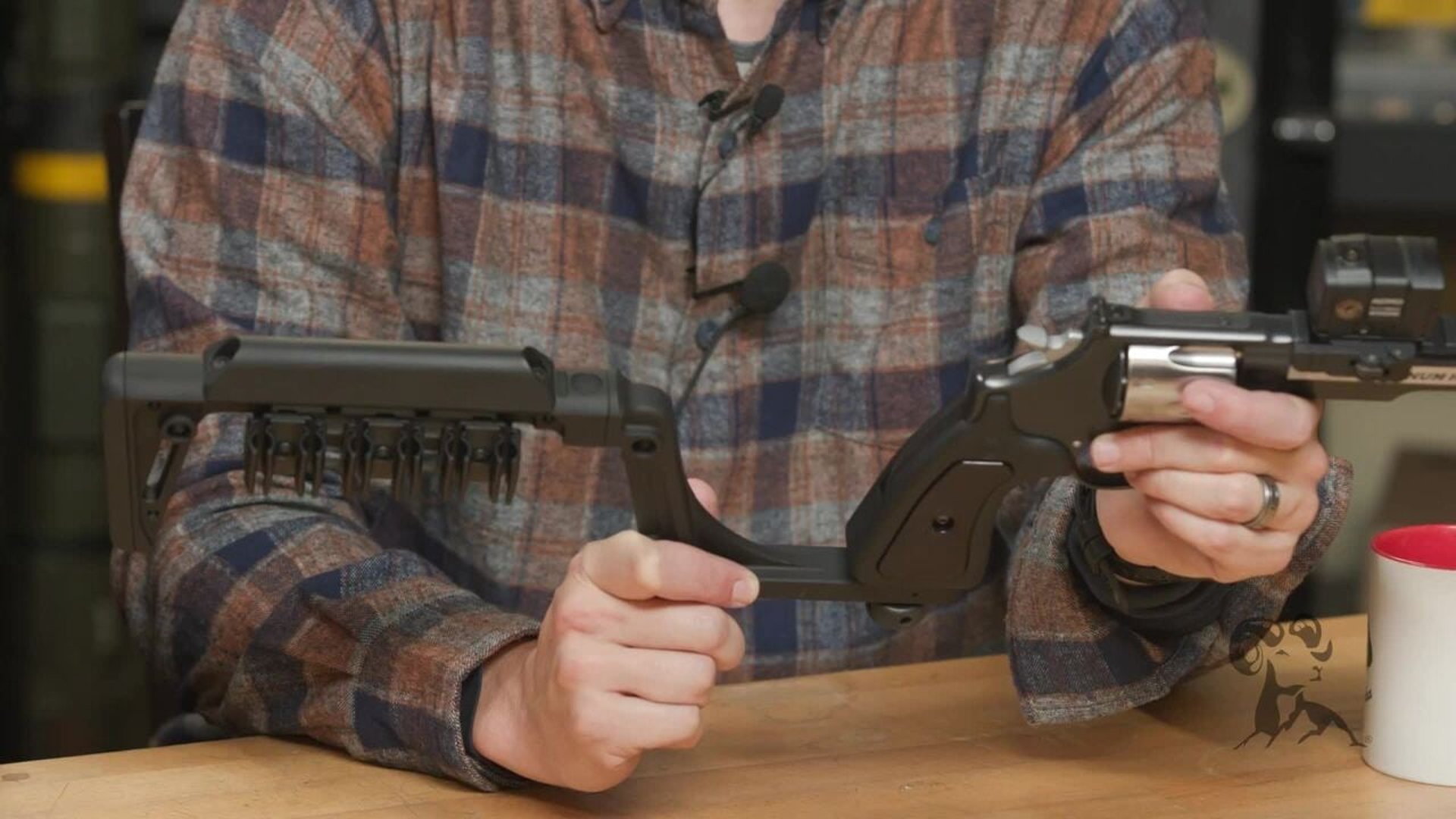
Troy introduces the product as a revolver-specific system offered in two versions: a pistol brace option and a pistol stock option. The main point is flexibility. The design is two-piece, so the revolver can still be used as a standard handgun, or you can add the rear support component when you want more stability and control.
The interface is built around a keyed, full-contact fit at the grip area, intended to lock up solid and stay secure under recoil.
𝗪𝗛𝗬 𝗠𝗜𝗗𝗪𝗘𝗦𝗧 𝗜𝗡𝗗𝗨𝗦𝗧𝗥𝗜𝗘𝗦 𝗕𝗨𝗜𝗟𝗧 𝗜𝗧
The “why” is straightforward. People have revolvers, and many of those revolvers are not getting used because they are harder to shoot well at distance and can be punishing in heavier calibers. Troy notes that during testing, the additional support can effectively extend practical range by improving stability and reducing shooter-induced error.
That becomes even more important with the current trend of red dots on handguns. When your sight picture is more precise, it makes sense to support the gun in a way that helps you actually use that precision.
𝗦𝗧𝗔𝗕𝗜𝗟𝗜𝗧𝗬, 𝗖𝗛𝗘𝗘𝗞 𝗪𝗘𝗟𝗗, 𝗔𝗡𝗗 𝗥𝗘𝗖𝗢𝗜𝗟 𝗖𝗢𝗡𝗧𝗥𝗢𝗟 𝗪𝗜𝗧𝗛 𝗕𝗜𝗚 𝗕𝗢𝗥𝗘 𝗥𝗘𝗩𝗢𝗟𝗩𝗘𝗥𝗦
Caleb immediately calls out how stable the setup feels behind a dot, especially with a consistent cheek weld. Troy follows that up with the practical benefit: recoil management and reduced fatigue. With hard-kicking revolvers, the limiting factor is often the shooter’s hands and endurance, not the gun’s mechanical accuracy. If a support system lets you shoot longer without getting beat up, you can train more, confirm zero more easily, and stay more consistent during a range session.
They reference testing with .44 Magnum and even very large calibers like .460 and .500, noting that the support changes the shooting experience from a few painful cylinders to something you can actually work with for multiple boxes.
𝗛𝗨𝗡𝗧𝗜𝗡𝗚 𝗔𝗣𝗣𝗟𝗜𝗖𝗔𝗧𝗜𝗢𝗡𝗦 𝗔𝗡𝗗 𝗣𝗥𝗔𝗖𝗧𝗜𝗖𝗔𝗟 𝗥𝗔𝗡𝗚𝗘
Caleb points out how useful this could be for deer hunting in places where handguns are common for that role. Troy adds that there are “pistol counties” and similar use cases where a revolver can be a serious hunting tool, but only if the shooter can place accurate shots at realistic distances. The goal here is to make the revolver more effective by improving stability, control, and confidence.
𝗪𝗛𝗔𝗧 𝗖𝗢𝗠𝗘𝗦 𝗪𝗜𝗧𝗛 𝗜𝗧 𝗔𝗡𝗗 𝗛𝗢𝗪 𝗧𝗛𝗘 𝗞𝗜𝗧 𝗜𝗦 𝗕𝗨𝗜𝗟𝗧
They shift into the construction and what’s included. The system uses replacement grip components, with an aluminum grip structure and polymer side panels. Troy notes that the kit is intended to arrive ready to go, with the necessary wrenches included and the brace or stock preassembled in the box.
They also highlight several user-friendly features:
A reversible shell holder so it works for right- and left-handed shooters
Cheek pieces included
A design approach that keeps the system self-contained with minimal setup complexity
The emphasis is that it is designed to be practical, not a project that requires custom fitting or a pile of extra parts.
𝗗𝗘𝗦𝗜𝗚𝗡 𝗚𝗘𝗢𝗠𝗘𝗧𝗥𝗬: 𝗖𝗟𝗘𝗔𝗥𝗔𝗡𝗖𝗘 𝗔𝗡𝗗 𝗦𝗧𝗥𝗘𝗡𝗚𝗧𝗛
Caleb asks about the swooping angle and overall shape, and Troy explains it is driven by ergonomics and strength. Once the revolver is paired with the rear support, the shooter still needs to get a normal, secure firing grip. The shape is intended to provide clearance for the hand while keeping the structure rigid.
Troy also points out the gusseted radius section, which is there for strength. With high-recoil calibers, any flex can be felt immediately and can cause problems over time. Their goal was a stout, rigid setup that does not bend or feel spongy under recoil.
𝗣𝗟𝗔𝗧𝗙𝗢𝗥𝗠 𝗦𝗨𝗣𝗣𝗢𝗥𝗧: 𝗪𝗛𝗔𝗧 𝗜𝗧 𝗙𝗜𝗧𝗦 𝗡𝗢𝗪 𝗔𝗡𝗗 𝗪𝗛𝗔𝗧’S 𝗡𝗘𝗫𝗧
For launch, Troy says they are starting with Smith and Wesson N-frame, round-butt revolvers, plus the Taurus Raging Hunter. From there, they already have additional designs in the works, including Smith and Wesson X-frame and L-frame options and Ruger models like the Super Blackhawk, Blackhawk, and Redhawk.
Caleb notes that single-action revolvers are especially interesting for hunters, and Troy agrees those platforms are likely to be popular as the lineup expands.
𝗪𝗥𝗔𝗣-𝗨𝗣
Caleb closes by saying he is ready to get one mounted up and take it to the range. If viewers have questions about compatibility, setup, or selecting the right configuration for their revolver, he points them to the comments and the Brownells tech line for support. The core takeaway is simple: the Bounty Hunter Series is designed to make revolvers more shootable, more stable behind a dot, and more practical for hunting and field use by improving recoil control and consistency.